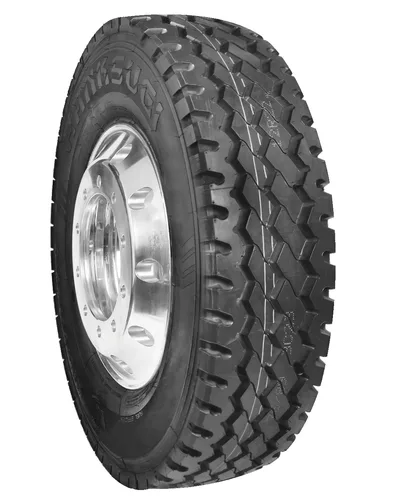
Heavy-duty tyres for container haulage, intermodal chassis and port terminal operations. Built for maximum loads and harsh yard conditions.
Drayage is the short-distance transport of shipping containers between ports, rail terminals, distribution centres and warehouses. It is the critical first and last mile of the intermodal supply chain, connecting ocean freight and rail shipments to their final destinations. While drayage trips are short, often less than 80 km, the demands on tyres are among the most severe in commercial trucking. Every load is at or near maximum legal gross vehicle weight. Port yard surfaces are rough, littered with debris and full of tight turns around stacked containers. Chassis tyres sit idle for days or weeks, losing pressure, then get loaded to capacity without inspection.
Tyre failures in drayage operations are not just expensive to repair. They create cascading delays through the supply chain. A blown tyre on a chassis in a port terminal blocks a lane, delays gate processing and can result in demurrage charges that dwarf the cost of the tyre itself. Per-turn economics in drayage are tight, and every minute a truck sits waiting for a tyre change is a turn not completed. Drayage operators who invest in quality tyres and proper maintenance consistently outperform those who chase the cheapest per-unit tyre cost, because the avoided downtime and roadside service calls more than offset the higher purchase price.
Hanksugi tyres address the specific demands of drayage and port operations with tyres designed for maximum load capacity, puncture resistance and durability on rough surfaces. The HS64+ KRATO MIX all-position tyre handles the steer and all-position needs of drayage tractors with a crack-resistant compound that shrugs off port debris. The mixed-service drive tyre uses a cut-and-chip resistant compound built for the mixed on-road and terminal surface conditions that drayage trucks encounter daily. The premium trailer tyre, with four steel belts for puncture resistance, is the right choice for intermodal chassis that carry maximum-weight containers.
Drayage operations cover three distinct environments, and each one attacks tyres differently. Understanding the specific hazards of each environment helps fleet managers select tyres that survive the complete duty cycle, not just one part of it.
All-position, drive and trailer tyres selected for the specific demands of container haulage, port terminal service and intermodal chassis applications.
The single most important specification for a drayage tyre is its load rating. Containers arrive from overseas loaded to the maximum allowable weight, and the tyre must carry its share of that weight without failing. Getting this wrong has consequences that range from premature tyre wear to catastrophic blowouts on the highway.
A standard 40-foot container can weigh up to 20.000 kg when fully loaded. Combined with the chassis weight of approximately 4.500 kg and the tractor weight of 7.300 to 9.100 kg, the gross combination weight regularly exceeds 31.800 kg and can approach the federal limit of 36.300 kg. Each tyre on the chassis must carry its proportional share of the container weight plus the chassis weight. On a standard two-axle chassis with four tyres per axle, each tyre carries approximately 2.500 to 3.200 kg depending on load distribution.
Always select tyres with load ratings that match or exceed the maximum axle weight the chassis will carry. For standard intermodal chassis, this typically means Load Range G (14PR) or Load Range H (16PR) tyres in the 11R22.5 or 295/75R22.5 sizes. Under-rated tyres operating at maximum container weight will generate excessive heat and fail prematurely. The premium trailer tyre is available in load ratings matched to the demands of fully loaded container chassis, with four steel belts providing the structural reinforcement needed to carry heavy loads kilometre after kilometre.
Tyres at maximum load require maximum inflation pressure. For a Load Range G tyre at full capacity, that is typically 110 PSI. For Load Range H, it is 120 PSI. There is no margin for under-inflation at these weights. A tyre running even 10 PSI below the required pressure at maximum load generates dramatically more heat, and in drayage where every load is a maximum load, that excess heat accumulates on every trip. Drayage operators should check tyre pressures before every dispatch and consider equipping chassis with automatic tyre inflation systems or at minimum tyre pressure monitoring. The few minutes spent checking pressures pays for itself many times over in avoided tyre failures and roadside service calls.
Container chassis are pooled equipment in many port environments, meaning a specific chassis may sit idle in a yard for days or weeks between dispatches. During idle time, tyres slowly lose pressure through natural permeation. When the chassis is finally pulled from the yard and loaded with a 20.000 kg container, the tyres may be between 20 and 30 PSI below their rated pressure. Loading a maximum-weight container on a chassis with under-inflated tyres is a recipe for a blowout within the first few kilometres. Chassis pools should implement systematic tyre pressure checks before equipment enters service, and drivers should verify tyre pressures on every chassis they hook to before leaving the terminal.
Each axle position on a drayage truck faces different challenges. Selecting the right tyre for each position maximises the life of every tyre on the truck and avoids the expensive mismatch of putting a highway tyre in a position that demands a mixed-service design.
Drayage steer tyres face a unique combination of highway running and aggressive yard manoeuvring. They need to deliver stable, predictable steering at highway speeds while surviving the tight turns and curb contact of terminal operations. The HS64+ KRATO MIX handles both environments with a crack-resistant compound that resists the surface damage from port debris without sacrificing the responsive handling needed on the highway at full load. Its reinforced sidewall construction withstands the scuffing and impact that drayage steer tyres absorb daily in port terminals.
Drive tyres on drayage trucks must transmit engine torque to the road surface while carrying maximum axle weights on every trip. The constant low-speed manoeuvring in port yards scrubs drive tyres aggressively, and stones from rough terminal surfaces lodge in the tread grooves. The mixed-service drive tyre is engineered for exactly this duty cycle. Its stone ejection features prevent stone-drilling damage, and the cut-and-chip resistant compound stands up to the rough, debris-laden surfaces found in port environments. Deeper tread depth provides extended life even under the accelerated wear conditions of drayage service.
Container chassis tyres live the hardest life in drayage. They carry the heaviest loads, sit idle losing pressure, roll through debris fields and often get no maintenance attention between dispatches. Puncture resistance is the top priority for chassis tyres because a flat tyre in a port terminal creates delays that cost far more than the tyre itself. The premium trailer tyre with four steel belts provides the puncture protection that chassis applications demand. Its construction is designed to resist the nail, bolt and twist-lock fragments that litter port yards and cause the majority of chassis tyre punctures. For fleets that control their own chassis, implementing a scheduled pressure check programme is the single highest-return tyre investment available.
Drayage operations chew through tyres faster than almost any other commercial application. The combination of maximum weights, rough surfaces, debris exposure and aggressive manoeuvring means drayage tyres may deliver only between 64.000 and 97.000 kilometres compared with the 160,000+ kilometres the same tyre might achieve in long-haul service. Accepting this reality and managing around it is the key to controlling drayage tyre costs.
The most impactful cost-control measure is maintaining proper inflation pressure. In drayage, where every load is a maximum load, running even slightly under-inflated tyres accelerates wear, generates excess heat and dramatically increases the chance of a catastrophic failure. A single tyre blowout on a chassis at the port can cost between USD 500 and USD 1.000 in roadside service charges, plus hours of lost productivity and potential demurrage fees. That one incident costs more than the price difference between a premium tyre and a budget tyre across an entire set. Invest in tyre pressure monitoring or automatic inflation systems, and build pressure checks into your dispatch procedures.
Track tyre costs per turn rather than per kilometre. In drayage, the relevant metric is how much each container move costs in tyre expense, not how many kilometres each tyre delivers. A tyre that costs 20% more but lasts 40% longer and avoids one roadside service call is far cheaper on a per-turn basis than a budget tyre that fails mid-route. Use our cost calculators to model your specific drayage economics, or contact our fleet solutions team for a tyre cost analysis tailored to your port and lane mix.
For chassis tyre management, establish a pull-in inspection protocol that checks tyres before chassis enter service. Measure tread depth, check inflation pressure and inspect for embedded debris and sidewall damage. Flag chassis with tyres below the minimum tread depth or with visible damage, and route them to maintenance before they return to service. This proactive approach catches problems before they cause failures and ensures that every chassis leaving the yard is on safe, properly inflated tyres. The Hanksugi retreading programme allows operators to extend the life of quality casings, further reducing the per-turn tyre cost for drayage operations.
Common questions about drayage tyres, container chassis and port truck tyre selection.
A drayage truck is a heavy-duty tractor used to haul shipping containers short distances between ports, rail yards, distribution centres and warehouses. Drayage operations typically cover less than 160 km per trip but involve maximum legal weight loads on every run. The trucks spend significant time in port terminals and container yards where road surfaces are rough, debris is common and tight turns around stacked containers are a constant hazard.
Most drayage tractors in Anguilla use 11R22.5 or 295/75R22.5 tyres on the steer and drive axles. Container chassis typically use 11R22.5 or 285/75R24.5 tyres depending on the chassis manufacturer and configuration. Tyre size is less important than the load rating in drayage applications, because containers are almost always loaded to the maximum legal weight.
Drayage tyres wear faster because the trucks operate at maximum gross vehicle weight on virtually every loaded trip, port yards have rough surfaces with debris that accelerate tread wear, and the short-haul duty cycle involves frequent acceleration, braking and tight turns that create more tread scrubbing per kilometre than highway driving. Combined, these factors mean drayage tyres may last only between 64.000 and 97.000 kilometres compared with 160,000+ kilometres for the same tyre on a long-haul highway truck.
Container chassis tyre failures are primarily caused by under-inflation, overloading and age-related deterioration. Chassis tyres often sit unused for extended periods, losing air pressure gradually. When a chassis is pulled from the yard with low tyre pressure and loaded with a container of more than 18.000 kg, the under-inflated tyre generates extreme heat that can cause a blowout within a few kilometres. Debris in port yards also causes punctures. Checking chassis tyre pressure and condition before every dispatch is the single most effective way to prevent failures.
When selecting tyres for intermodal container chassis, prioritise load capacity, puncture resistance and durability over tread life. Chassis tyres spend most of their kilometres at maximum legal weight, so the tyre must be rated for the heaviest axle load. Four-steel-belt construction provides the puncture resistance needed for port environments where debris is common. The Hanksugi premium trailer tyre with its four steel belts is well-suited for chassis applications.
Yes, drayage tyres on the tractor can be retreaded if the casing passes inspection. However, the harsh operating conditions of drayage service cause more casing damage than highway applications, so the retread acceptance rate is typically lower. To maximise retread potential, remove tyres before the tread wears into the wear indicators, maintain proper inflation pressure throughout the tyre's life and inspect casings promptly after removal. Visit our retreading page for more information.