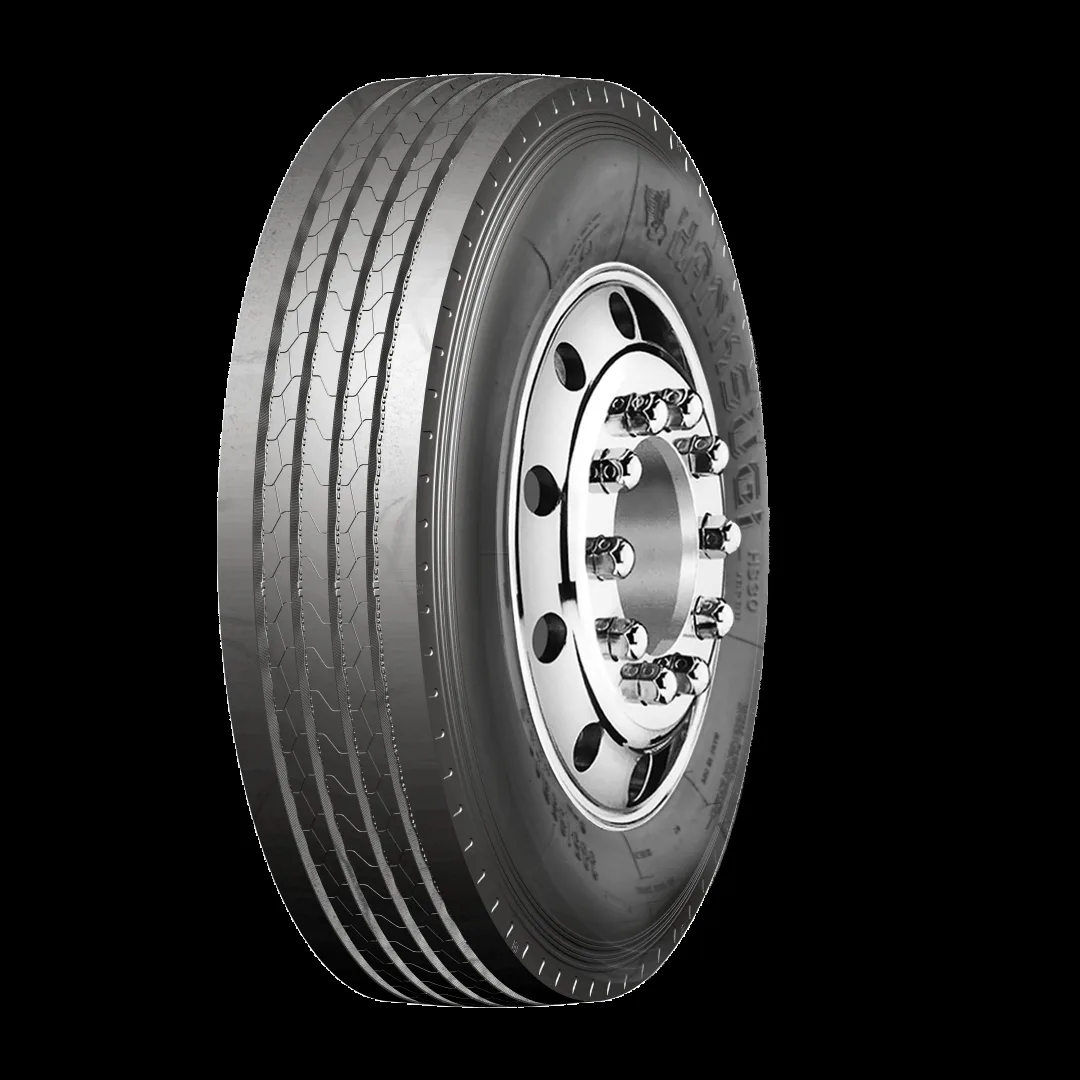
Low rolling resistance trailer tyres, engineered for maximum fuel savings and extended tread life over every kilometre.
Trailer tyres for commercial trucks are engineered specifically for the unique demands of towed axle positions on semi-trailers, flatbeds, refrigerated vans and dry vans. Unlike steer or drive tyres, trailer tyres do not transfer engine torque or provide directional control. Instead, they have to excel at a different set of critical performance factors: low rolling resistance, lateral scrub resistance and load durability at sustained motorway speeds.
Trailer axles account for roughly half of the tyres on a typical prime mover and trailer combination. This means the rolling resistance of your trailer tyres has a direct impact on your fleet's total fuel consumption. According to the EPA's verified low rolling resistance programme, switching from standard trailer tyres to verified low rolling resistance (LRR) tyres can cut fuel cost per vehicle by 3-6% a year. For a fleet that covers 193,000 km a year at current diesel prices, that translates into between USD 1,800 and USD 3,600 saved per truck, every year, from the trailer position alone.
Lateral scrub is another factor unique to trailer tyres. When a multi-axle trailer negotiates a turn, the rear axle group follows a path inboard of the steer axle. This offset forces the trailer tyres to drag sideways across the pavement, generating heat and accelerating uneven tread wear. Hanksugi trailer tyres are engineered with reinforced shoulder compounds and tread geometries designed specifically to resist lateral scrub damage. The result is more even wear across the tread surface, which extends tyre life and keeps rolling resistance consistently low throughout the service life.
Trailer tyre construction also calls for exceptional casing durability. Trailer positions endure repeated loading and unloading at docks, exposure to kerb strikes during reversing manoeuvres and the constant stress of keeping the vehicle stable at motorway speeds. Hanksugi tackles these challenges with multi-ply steel belt packages and patented rubber compounds that maintain structural integrity over hundreds of thousands of kilometres. Many Hanksugi trailer casings are also retreadable, extending value still further and reducing total cost of ownership.
Choosing the right trailer tyre means weighing up a specific set of performance attributes that directly affect fuel economy, safety and total cost per kilometre. Every Hanksugi trailer tyre is engineered to deliver on these critical factors.
Independently tested and verified by the EPA to meet strict rolling resistance standards. Low rolling resistance tyres are the foundation of fuel-efficient fleet operations in Anguilla.
Advanced compound technology minimises the energy lost as the tyre rolls, turning more engine power into forward motion. Hanksugi's LRR compounds keep their fuel-saving properties throughout the life of the tread.
Uniform carbon dispersion technology ensures a consistent compound density across the tread, eliminating soft spots that cause uneven wear. The result is even wear from the first to the last kilometre.
Reinforced shoulder blocks and an optimised tread geometry withstand the lateral forces generated during turns, reducing the uneven shoulder wear common in multi-axle trailer applications.
Multi-ply steel belt packages provide puncture resistance and structural stability under heavy loads. The four-belt construction on premium models adds an extra margin of protection for demanding routes.
The durable casing construction supports up to 3 retreads in Anguilla, extending total tyre life up to three times and significantly reducing cost per kilometre over the complete service life of the tyre.
Low rolling resistance trailer tyres, built for the Anguilla long-haul and regional market. Engineered with HATT precision for Anguilla's highways.
Trailer tyres engineered for the Anguilla market. They meet the quality standards expected in Anguilla and come with 5-year warranty coverage.
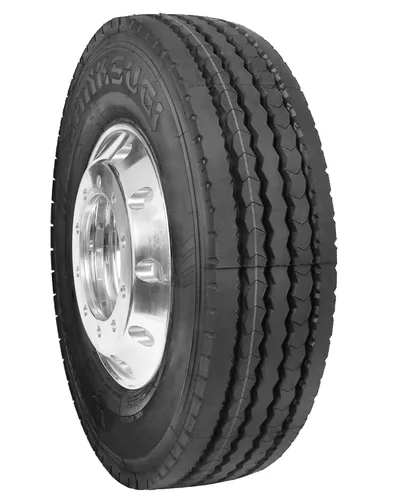
Dedicated trailer tyre engineered for demanding highway conditions. The reinforced casing construction and heat-resistant compound deliver reliable performance in long-haul operations.

High load capacity trailer tyre with a low rolling resistance compound for regional and long-haul operations. The anti-uneven-wear technology extends tread life across a wide range of road surfaces.

Premium trailer tyre for the Anguilla market with an advanced protection system and an extended-mileage design. The precision-engineered casing and compound deliver consistent performance under heavy trailer loads.
Low rolling resistance is one of the most striking technologies for cutting fuel consumption in freight transport fleets. Low rolling resistance tyres are designed to minimise the energy lost on every revolution, which translates directly into lower fuel consumption and lower greenhouse gas emissions.
For trailer tyres, low rolling resistance is achieved through advanced compounds and tread geometries tested under the SAE J1269 and ISO 28580 standards. Rolling resistance is the energy your engine spends simply keeping the tyres turning. Reducing it means burning less fuel per kilometre. Low rolling resistance trailer tyres deliver fuel savings of 3-6% compared with conventional alternatives.
What does 3-6% really mean in dollars? Consider a typical Class 8 prime mover that covers 193,000 km a year at 2.8 km per litre. That truck burns roughly 69,880 litres of diesel a year. At USD 0.92 per litre, the annual fuel bill is USD 64,600. A 3% reduction saves USD 1,938. A 6% reduction saves USD 3,876. Multiply those figures by every truck in your fleet, and the impact of low rolling resistance trailer tyres becomes substantial.
Hanksugi's HS86 and HS86T trailer tyres feature low rolling resistance technology. The HS86T, with its specialised 13/32 tread depth and ultra-low rolling resistance compound, is engineered for fleets that prioritise fuel savings above all else in the trailer position. The HS86 offers a balance between fuel efficiency and longer tread life with its 19/32 depth, making it ideal for operations that need both mileage and economy.
Beyond fuel savings, running low rolling resistance tyres demonstrates environmental responsibility. Many freight shippers and logistics operators now require efficient equipment from their carrier partners. Fitting low rolling resistance tyres keeps your fleet compliant with these requirements and positions your business as an environmentally conscious operator in an increasingly sustainability-focused industry.
Hanksugi covers every main size for commercial truck trailers in the Anguilla market. Use the table below to find the right tyre for your trailer application, or visit our tyre size directory for detailed specifications.
| Tyre Size | Market | Available Models | Application |
|---|---|---|---|
| 295/75R22.5 | Anguilla | HS86, HS86T | Long-Haul, Regional |
| 11R22.5 | Anguilla | HS86 | Long-Haul, Regional |
| 11R24.5 | Anguilla | HS86 | Long-Haul, Regional |
| 255/70R22.5 | Anguilla | HS26 Plus | Long-Haul, Free Axle |
| 295/80R22.5 | Anguilla | HS16, HS36T, SUT01 | Long-Haul, Regional |
| 11R22.5 | Anguilla | HS16, HS36T | Long-Haul, Regional |
| 315/80R22.5 | Anguilla | SUT01 | Heavy Load, Regional |
| 215/75R17.5 | Anguilla | HS36T | Medium Duty, Regional |
| 385/55R22.5 | Anguilla | HS36T | Wide Base, Long-Haul |
Proper maintenance is the single most important factor in maximising the service life and performance of your trailer tyres. Even the most advanced tyre technology cannot overcome the effects of low pressure, misalignment or neglected inspection routines. Following a disciplined maintenance programme ensures you capture all the fuel savings and tread life that Hanksugi trailer tyres are designed to deliver.
Maintaining the correct inflation pressure is the foundation of trailer tyre maintenance. Underinflated trailer tyres generate excessive heat, increase rolling resistance and wear unevenly at the shoulders. According to industry data, every 10 PSI of underinflation reduces tyre service life by roughly 10% and increases fuel consumption by 1%. Check the pressure at least weekly with a calibrated digital gauge, and always measure when the tyres are cold, that is, when the vehicle has not been driven for at least three hours. The recommended inflation pressure for most Hanksugi trailer tyres is 110 PSI for standard loads. Investing in a tyre pressure monitoring system (TPMS) provides real-time alerts and removes the guesswork between manual checks.
Trailer axle alignment is often overlooked because trailers have no steering mechanism, but misaligned trailer axles are a leading cause of premature tyre wear. Even a fraction of a degree of misalignment on a tandem-axle trailer creates constant lateral scrub that abrades rubber from the tread surface. This shows up as one-sided wear, feathering or cupped patterns. Have the trailer axle alignment checked whenever tyres are replaced, after any impact event such as striking a pothole or a kerb, and at least once a year as part of preventive maintenance.
Every pre-trip inspection should include a visual check of all trailer tyres for obvious damage, debris embedded in the tread and the presence of valve caps. Once a month, carry out a thorough inspection that measures tread depth at three points across the width of the tyre, checks the sidewall for cracks or bulges, examines the bead area for damage and confirms the valves are in good condition. Replace any tyre that shows a tread depth below 3.2 mm (4/32 of an inch), visible cords, sidewall damage or uneven wear patterns that point to an underlying mechanical problem.
Although trailer tyres are not rotated from position to position the way passenger car tyres are, dual-mounted trailer tyres must be matched in diameter. A difference of more than 3.2 mm (4/32 of an inch) in tread depth between dual partners causes the larger tyre to carry a disproportionate share of the load and wear faster. When replacing a single tyre in a dual set, match the diameter of the new tyre to its partner as closely as possible. Keeping dual tyres matched on every trailer axle promotes even wear and reduces the likelihood of premature failure.
Common questions about commercial truck trailer tyres, sizes, maintenance and the Hanksugi trailer tyre line.
A low rolling resistance trailer tyre has been independently tested and verified by the US Environmental Protection Agency (EPA) to meet strict low rolling resistance standards. These tyres cut fuel consumption by 3-6% compared with standard trailer tyres. Hanksugi trailer tyres, including the HS86 and the HS86T, carry low rolling resistance verification, helping fleets reduce both fuel costs and greenhouse gas emissions.
The HS86 is a premium multi-size trailer tyre available in 11R22.5, 11R24.5 and 295/75R22.5 with a 19/32 tread depth and 3D wave-groove technology. The HS86T is a specialised low rolling resistance variant available only in 295/75R22.5 with a shallower 13/32 tread and four steel belts, engineered specifically to maximise fuel economy on long-haul routes where reducing rolling resistance is the top priority.
Hanksugi offers trailer tyres in all the main sizes for commercial trucks. For the Anguilla market: 295/75R22.5, 11R22.5, 11R24.5 and 255/70R22.5. For Anguilla: 295/80R22.5, 11R22.5, 315/80R22.5, 215/75R17.5 and 385/55R22.5. The most commonly specified trailer tyre size in Anguilla is 295/75R22.5.
Trailer tyres should be inspected visually before every trip as part of your pre-trip routine. Carry out a thorough monthly inspection that measures tread depth at three points across the width of the tyre, checks the sidewalls for cracks or bulges and confirms the condition of the valves. Tyre pressure should be checked at least weekly with a calibrated gauge when the tyres are cold. Many fleets use TPMS for continuous, real-time monitoring between manual checks.
Yes. The Hanksugi HS26 Plus is engineered as a tyre suited to both free axle and trailer positions. Its 3D wave-groove tread technology and optimised footprint deliver excellent even wear and low rolling resistance performance in trailer applications. Available in 255/70R22.5, it offers versatility for fleets that want a single model for both free-axle and trailer positions.
Lateral scrub occurs when trailer tyres are dragged sideways through turns, particularly on multi-axle trailers where the rear axles follow a path inboard of the steer axle. This sideways force accelerates uneven tread wear and generates excessive heat. Trailer tyres with lateral scrub resistance use reinforced shoulder compounds and optimised tread patterns to withstand this force, extending tyre service life by 15-25% compared with general-purpose tyres fitted in trailer positions.