
Open-shoulder drive tyres and all-position tyres engineered for scrub resistance, built for LTL, pick-up and delivery, and urban distribution operations.
Regional haulage covers the middle ground between long-haul interstate operations and local pick-up and delivery routes. A typical regional truck operates within a radius of 320 to 800 km of its home terminal, running routes with multiple stops that combine highway sections with urban and suburban deliveries. LTL carriers, food and beverage distributors, construction supply deliveries and general freight consolidators all fall within the regional haulage category. These operations place a specific set of demands on tyres that neither purely long-haul nor purely urban tyres can address on their own.
The defining challenge of regional haulage is variety. On a single shift, a regional truck in Antigua and Barbuda might travel at 90 km/h along the main island road for 30 km, then navigate narrow streets in Saint John's with potholes, reverse into a tight loading bay at a Parham warehouse with sharp steering turns, and repeat that cycle four or five times. The tyres on that truck must sustain highway speeds without overheating, provide traction on wet urban streets during tropical downpours, resist the lateral scrubbing forces of tight turns in loading areas and survive kerb contact without sidewall damage. No long-haul tyre can handle loading-bay manoeuvres, and no purely urban tyre offers acceptable fuel economy on highway sections.
Regional haulage tyres solve this problem with specific engineering trade-offs. On the drive axle, open-shoulder tread patterns sacrifice some rolling resistance compared with closed-shoulder highway designs, but gain the critical wet-weather traction and all-conditions confidence that regional drivers need. The independent shoulder blocks on an open-shoulder drive tyre bite into wet pavement during rain, and the wider void areas evacuate water from the contact patch faster than closed-shoulder alternatives. On the steer axle, regional tyres use compound formulations that resist scrub wear from frequent turns and casing constructions that protect against pothole impact damage and kerb strikes — both common on Antigua's mix of paved and unpaved roads.
For fleet managers operating regional routes, the tyre selection decision comes down to balancing fuel economy with durability and traction. A tyre that saves 2% on fuel but wears 30% faster on regional routes is not a good trade. The right regional tyre offers acceptable fuel economy on highway sections while thriving under the stop-start, tight-turn and variable-surface conditions that define the regional work cycle.
Open-shoulder drive, mixed-service and all-position tyres engineered for the stop-start demands of regional haulage. Superior wet-weather traction and scrub resistance for routes that combine highway and urban driving.
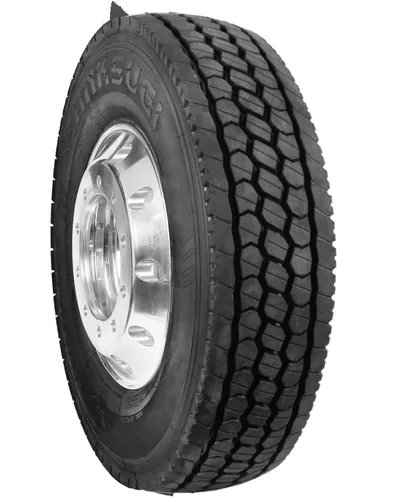
Regional open-shoulder drive tyre with stone-ejection protection, a wide tread footprint and four decoupling grooves for superior wet-weather traction in all conditions. The preferred drive tyre for LTL and pick-and-deliver operations.
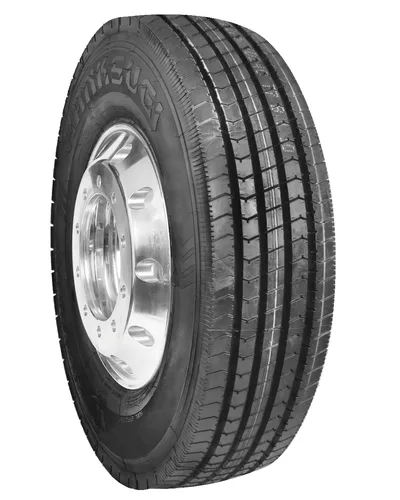
All-position tyre with excellent wet and dry performance and a retreadable casing. Extra-deep 15.5 mm rolling tread with sidewall protection for regional haulage in steer, drive and trailer positions.
Not all regional operations are alike. Tyre demands vary considerably depending on the specific type of regional haulage, the cargo and the delivery environment. Understanding your operation type helps narrow tyre selection to the models that will deliver the best total cost of ownership.
LTL carriers face the most demanding environment for regional tyres. A typical LTL truck makes 8 to 15 stops per day, with frequent reverse manoeuvres into loading bays that generate high lateral forces on drive and steer tyres. The constant stop-turn-start cycle wears tyres faster than any other regional application. The HS68 excels in LTL service because its open-shoulder design resists the uneven wear that destroys closed-shoulder tyres in high-stop operations. The wide tread footprint distributes forces during loading-bay manoeuvres, and stone-ejection protection prevents damage from debris commonly found in industrial delivery areas around Saint John's and Parham.
Pick-up and delivery operations combine the stop frequency of LTL with the additional challenge of navigating residential and commercial areas with narrow streets, tight parking and heavy traffic. P&D drivers make more turns per kilometre than any other transport application, generating significant scrub wear on steer tyres. Kerb contact during parallel parking and delivery stops is a constant risk for sidewalls. For P&D operations, the all-position HS76 offers versatility across all axle positions, simplifying inventory management for smaller fleets, while its sidewall protection handles the kerb exposure typical of urban delivery routes in Saint John's.
Food and beverage distributors frequently carry heavy loads on multi-stop routes, with product cases stacked to the gross vehicle weight limit. The combination of heavy freight and frequent stops subjects drive tyres to maximum stress, accelerating both tread wear and heat build-up. These operations are also often run in the early morning and late evening, when wet roads and limited visibility increase the importance of traction. The HS68 provides the wet-weather safety margin that food and beverage operators need, while its robust construction handles the heavy loads that come with fully loaded pallets of product.
Construction material delivery trucks split their time between sealed roads and site-access tracks. Tyres encounter gravel, broken concrete, timber debris with nails and unsealed surfaces in addition to normal highway driving. This mixed-surface work cycle requires a tyre that can handle both environments without premature failures. A mixed-service drive tyre closes this gap with a cut-and-chip-resistant compound that survives construction-site debris while maintaining acceptable highway performance. Stone-ejection features prevent the puncture damage common on gravel access roads found at building sites across Antigua.
In long-haul transport, a deeper tread means more kilometres and a lower cost per kilometre, full stop. In regional haulage, the calculation is more complex because a deeper tread also means higher rolling resistance, which costs fuel on every kilometre, and regional trucks burn more fuel per kilometre than long-haul trucks due to the energy wasted in constant acceleration and braking cycles.
A regional drive tyre with a 26/32-inch tread depth generates noticeably more rolling resistance than one at 22/32 inch, simply because there is more rubber flexing with each revolution. For a long-haul truck covering 965 km of straight motorway, the deeper tread pays for itself in extended mileage. For a regional truck making 15 stops in 320 km, the deeper tread can cost more in fuel than it saves in extended service life. The optimum depth for regional applications balances sufficient rubber for durability against the fuel penalty of excess tread mass.
Hanksugi regional tyres are calibrated for this trade-off. The HS68 uses a tread depth that delivers an extended service life without the rolling-resistance penalty of an excessively deep long-haul pattern. The tread compound is formulated to resist scrubbing and the thermal cycles of stop-start driving, which means the tyre maintains its performance characteristics as it wears, rather than progressively hardening and losing grip as some long-haul compounds do in regional service.
Fleet managers sometimes reject purpose-built regional tyres because the fuel-efficiency numbers look worse than long-haul alternatives on paper. But those paper numbers assume sustained motorway speeds. In real regional service, the slightly higher rolling resistance of a regional tyre is offset by three factors: first, regional tyres resist uneven wear better than long-haul tyres in stop-start service, meaning they last longer before reaching minimum tread depth. Second, regional tyres provide better wet-weather traction, reducing the risk of accidents and the catastrophic costs associated with traction-related incidents. Third, regional tyres maintain more consistent wear patterns, meaning more consistent performance and fewer mid-interval tyre changes that interrupt working hours and generate additional labour costs. When total cost of ownership is calculated across the full life of the tyre, purpose-built regional tyres almost always outperform long-haul tyres used in regional service.
Understanding the engineering differences between regional and long-haul tyres helps fleet managers make informed decisions about which tyre belongs on which truck.
Regional trucks are more demanding on tyres than long-haul trucks, which means maintenance discipline matters even more. Frequent stops, turns and the varied surfaces of regional service create wear and damage opportunities that do not exist on straight-line motorway driving. A proactive maintenance programme focused on the specific challenges of regional operations can extend tyre life by 20 to 30% compared with a reactive approach.
Regional trucks hit more potholes and uneven surfaces per kilometre than long-haul trucks, and each impact can shift alignment settings. Check steer-axle alignment every 64,000 km for regional trucks, compared with every 80,000 km for long-haul. Watch for feathering wear across the tread face, which indicates toe misalignment, and stepped wear on the shoulder, which points to camber problems. Many regional fleets find that investing in an in-house alignment bay pays for itself within the first year by detecting and correcting alignment deviations before they destroy tyres.
The thermal cycles that regional tyres experience — heating on highway sections, cooling during stops, heating again — make pressure more volatile than in long-haul service, where tyres reach a stable operating temperature and remain there for hours. Check pressures daily before departure with a calibrated gauge. Regional drive tyres in dual fitment typically run at 100 to 110 PSI, but confirm with the load/inflation tables for your specific tyres and actual cargo weights. Under-inflation is the leading cause of premature regional tyre failure because the repeated flexing of stop-start driving generates far more heat in an under-inflated tyre than sustained motorway driving does.
Regional tyres face sidewall threats that long-haul tyres rarely encounter: kerb impacts during loading-bay approaches, pothole strikes in urban areas and contact with dock bumpers and railings. Train drivers to inspect sidewalls for cuts, tears and bulges during pre- and post-trip inspections. A sidewall cut that exposes casing cords will lead to a blowout if not caught. Bulges indicate internal casing-ply damage, often from a pothole impact, and require immediate tyre removal. Catching sidewall damage in time prevents costly roadside failures and preserves the casing for possible retreading.
Regional tyre casings can be retreaded, but casing condition depends greatly on maintenance practices during the original tread life. A regional tyre that ran under-inflated or suffered unrepaired kerb damage may not produce a retreadable casing, while a well-maintained one will. Remove tyres at the minimum tread depth; do not run them down to the wear bars, as the thin rubber remaining generates excessive heat that can damage the casing. The Hanksugi retread programme verifies casing integrity through non-destructive testing before accepting casings for retreading, ensuring that only sound casings receive a new tread.
Find the right Hanksugi tyre for your specific transport operation.
Low-rolling-resistance motorway tyres for long-distance operations. Steer, drive and trailer tyres engineered for maximum fuel efficiency on high-annual-mileage routes.
Cut-and-chip-resistant tyres for construction, quarrying and mixed-service operations on unsealed and uneven surfaces.
Heavy-duty tyres for tippers, concrete mixers, refuse collection vehicles and other vocational applications with extreme load demands.
Complete range of drive tyres: closed-shoulder, open-shoulder and mixed-service models for motorway, regional and all-terrain applications.
Common questions about regional haulage truck tyres, short-route tyre selection and tyre maintenance for urban delivery operations.
A regional haulage truck tyre is designed for commercial trucks that operate within a radius of 320 to 800 km of their home terminal, making multiple stops per day on a mix of highways, secondary roads and urban streets. Unlike long-haul tyres that prioritise low rolling resistance for sustained speeds, regional tyres prioritise traction, scrub resistance and durability under the lateral forces and frequent braking that characterise stop-start operations. Regional drive tyres typically use open-shoulder tread patterns for grip in wet conditions.
Regional trucks experience fundamentally different forces to long-haul trucks. A long-haul truck may make 2 to 3 stops per day at motorway speed. A regional truck can make 10 to 20 stops with frequent turns, loading-bay approaches and low-speed manoeuvres. These operations generate lateral scrubbing forces, high-frequency braking heat and kerb-contact risks. Long-haul tyres used in regional service develop uneven wear patterns because their compounds and tread designs are not built for those forces. Purpose-built regional tyres use different compound hardness, tread geometry and casing construction to withstand these demands.
Regional haulage tyres balance tread depth against fuel efficiency differently to long-haul tyres. For regional drive tyres, depths of 20/32 to 24/32 inch are typical, providing sufficient rubber for an extended service life without the rolling-resistance penalty of long-haul depths of 28 to 30/32 inch. Regional steer tyres commonly run 16/32 to 20/32 inch depths. Shorter route distances mean that per-kilometre fuel efficiency matters less than traction and wear resistance under stop-start conditions.
Using a single tyre for both applications is a compromise that costs money in either direction. A long-haul tyre on a regional route develops uneven wear and reduced wet-weather traction. A regional tyre on a long-haul route wastes fuel through higher rolling resistance. If your fleet combines both applications, consider the HS68 as a versatile drive tyre that handles regional demands while offering acceptable motorway performance, or segment your tyre purchases according to route allocation.
Open-shoulder drive tyres outperform closed-shoulder designs significantly in wet conditions. Independent shoulder blocks and lateral grooves create additional biting edges that grip the road surface during rain. Wider void areas evacuate water from the contact patch faster, reducing the risk of aquaplaning. The Hanksugi HS68 features four decoupling grooves and aggressive sipes that improve wet-weather traction while maintaining stone-ejection protection against debris damage.
The three most common causes are misalignment, incorrect inflation and using the wrong tyre for the application. Steer-axle misalignment causes feathering or diagonal tread wear. Under-inflation causes excessive shoulder wear and heat build-up. Using long-haul tyres in regional service causes heel-and-toe block wear because the harder compound does not flex adequately under lateral turning forces. Worn suspension components, particularly shock absorbers and bushings, also contribute. Regular alignment checks, daily pressure checks and correct tyre selection are the most effective preventive measures.