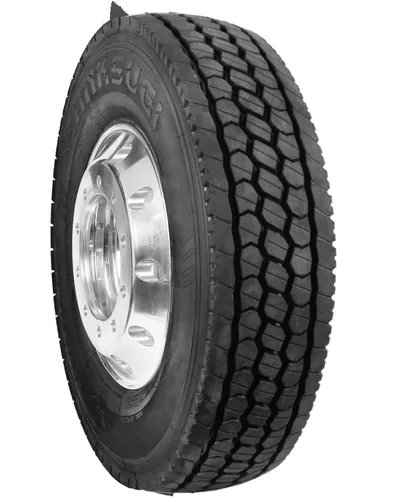
Closed-shoulder highway tyres, open-shoulder regional tyres and mixed-service drive tyres designed for maximum traction and mileage.
Drive tyres for commercial trucks are fitted to the rear drive axles of Class 6 to Class 8 vehicles, where they perform the critical function of transmitting engine torque to the road surface. Every time a driver accelerates, climbs a gradient or brakes on a descent, the drive tyres are the point of contact between several hundred horsepower and the pavement. This demanding role requires a fundamentally different design from steer or trailer positions.
The tread patterns on drive tyres are deeper and more aggressive than those on steer or trailer tyres, with wider void areas between the blocks that allow the tyre to grip the road under power. Typical tread depths range from 20/32 to 30/32 of an inch (or 20 mm to 24 mm in metric specifications), providing a deep rubber reserve that extends service life under the high-wear conditions of the drive axle. The compound must balance two competing requirements: soft enough to conform to road irregularities and generate traction, yet hard enough to resist the accelerated wear inherent to the drive axle.
The shoulder design of a drive tyre determines its application category. Closed-shoulder tyres connect the outer blocks with a continuous rib, creating a smooth edge that reduces rolling resistance and promotes even wear on highway surfaces. Open-shoulder tyres use independent blocks separated by lateral grooves that bite into wet, unpaved or loose surfaces for improved traction in variable conditions. Mixed-service tyres combine elements of both designs with reinforced compounds that resist cuts and chunking on unsealed worksites.
For fleet managers, the choice of drive tyres has a direct, measurable impact on fuel savings, driving safety and cost per kilometre. The drive position wears tyres faster than the steer or trailer positions due to the torque forces involved, making tyre cost a significant item in operating budgets. Hanksugi drive tyres are engineered with uniform carbon dispersion compounds, optimised block geometry and multi-layer steel belt construction to deliver competitive mileage across all categories while maintaining the traction performance that keeps trucks operating safely in all conditions.
The most important decision when selecting a drive tyre for a commercial truck is choosing between closed-shoulder and open-shoulder tread designs. Each architecture suits a different operating profile, and choosing the wrong one can cost thousands in excessive fuel consumption or premature tyre replacement.
For a detailed comparison with specific mileage data and application recommendations, see our complete guide: Closed-Shoulder vs. Open-Shoulder Drive Tyres — Complete Guide for Fleets.
Low rolling resistance drive tyres covering every application: closed shoulder for highway, open shoulder regional and mixed-service on/off-highway. The HS88 is the best-selling drive tyre in the Hanksugi Antigua and Barbuda range.
Hanksugi drive tyres for Antigua and Barbuda incorporate HATT compound technology and are engineered for the demanding road conditions of this Caribbean island nation, from Saint John's port haulage to construction routes in the interior. They meet the quality standards required for the Antiguan market. The 295/80R22.5 size is the primary focus for long-haul operations in Antigua and Barbuda.
The HS28+ Titan Trax is Hanksugi's flagship drive tyre for the Antiguan market, featuring the proprietary HATT 3+1 compound system. This multi-layer architecture combines three functional rubber plies — a surface ply optimised for traction, a fuel-efficient base layer and a heat-resistant belt edge ply — with an additional protective ply that prevents stone penetration and casing damage. With 22 mm of tread depth, an 18PR load rating and speed rating M, the Titan Trax is built for the 295/80R22.5 size that dominates drive-axle applications in Antigua and Barbuda. Fleets operating long-haul corridors between Saint John's and the island's southern parishes report strong traction performance alongside competitive fuel efficiency figures — a combination that is difficult to achieve with conventional single-compound drive tyres.
See HS28+ Titan Trax details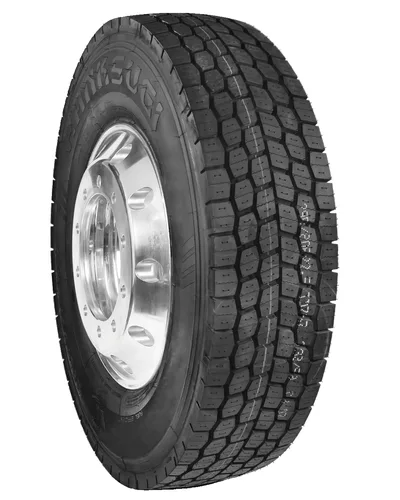
HATT 3+1 compound for drive-axle traction and optimised fuel savings. Hanksugi's flagship drive tyre for Antigua and Barbuda in the 295/80R22.5 size.
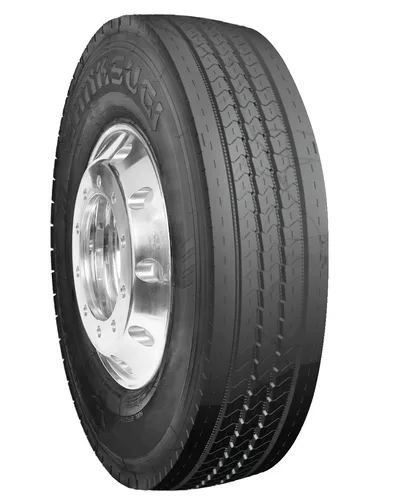
Drive tyre engineered for precise handling, advanced casing protection and extended mileage. 16.5 mm tread depth for long-haul operations in Antigua and Barbuda.
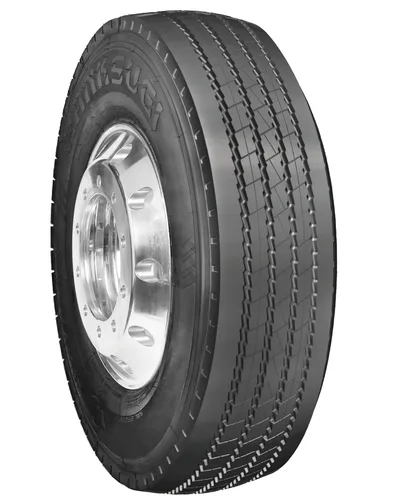
3D sipe design with improved heat dissipation and high load capacity. Built for demanding drive-axle applications in Antigua and Barbuda in the 385/65R22.5 size.
Hanksugi drive tyres cover the main sizes for commercial trucks used in the Americas. Click any size below to view detailed specifications, load ratings and model availability for the drive position.
| Size | Market | Available Models | Tread Depth | Details |
|---|---|---|---|---|
| 295/75R22.5 | Antigua and Barbuda | HS88, HS68 | 20.6-29/32" | See size guide |
| 11R22.5 | Antigua and Barbuda | HS88, HS68, HS84 | 19-29/32" | See size guide |
| 11R24.5 | Antigua and Barbuda | HS88, HS68, HS84 | 19-29/32" | See size guide |
| 285/75R24.5 | Antigua and Barbuda | HS68 | 20.6/32" | See size guide |
| 295/80R22.5 | Antigua and Barbuda | HS28+ Titan Trax | 22mm | See size guide |
| 315/80R22.5 | Antigua and Barbuda | SUS01 | 16.5mm | See size guide |
| 385/65R22.5 | Antigua and Barbuda | SUS02 | 16mm | See size guide |
The right drive tyre depends on where and how your trucks operate. Every application places different demands on the drive axle, and selecting a tyre suited to your work cycle delivers the best combination of mileage, traction and cost per kilometre.
Fleets covering more than 160,000 kilometres per year need closed-shoulder drive tyres that maximise fuel savings and deliver even wear over the long kilometres between changes. The HS88, with its hexagonal central block design and 29/32" tread band, is the primary recommendation for this application. Low rolling resistance compounds pay for themselves in fuel savings over the life of the tyre, and the even-wear pattern extends removal mileage compared to open-shoulder alternatives. Prioritise low rolling resistance and even-wear potential when evaluating tyres for long-haul routes.
Regional routes involve frequent stops, tight turns and exposure to variable weather conditions that demand more from a drive tyre than a straight motorway run. Open-shoulder tyres such as the HS68 provide the lateral traction and wet-weather grip needed for urban and suburban driving around Saint John's and the island's port areas. Wider void areas evacuate water faster during tropical downpours, and the independent shoulder blocks bite the surface during low-speed manoeuvres at freight depots and delivery stops. Accept the modest increase in rolling resistance in exchange for greater safety margins and confidence in all conditions.
Construction, utilities, aggregate and waste-haul operations combine time on sealed roads with unsealed worksites. Mixed-service drive tyres like the HS84 use cut- and chunk-resistant compounds that stand up to sharp rocks, gravel and debris present on construction sites without sacrificing acceptable highway performance. Stone-ejection features in the tread grooves prevent stone drilling that can damage the belt package and cause premature casing failure. Choose mixed-service tyres when more than 20% of your route kilometres are on unsealed or construction surfaces.
Long-haul operations across Antigua and Barbuda encounter road conditions that vary considerably between the main tarmac roads and secondary routes serving inland communities such as All Saints, Liberta and Swetes. The HS28+ Titan Trax in the 295/80R22.5 size uses HATT 3+1 compound technology to balance traction and fuel savings in these mixed conditions. Antiguan fleets should prioritise retreadable casings and compound durability, as the consistently high tropical temperatures and varying road surfaces impose additional thermal stress on tyre compounds. This tyre meets the quality standards required for the Antiguan market.
Drive tyres operate under the highest stress of any axle position on a commercial truck. The combination of engine torque, braking forces and payload weight means that drive tyres wear faster and are more sensitive to maintenance lapses than steer or trailer positions. Following a disciplined maintenance programme protects your investment in drive tyres and maximises the kilometres you get from each set.
Check drive tyre inflation pressure weekly with a calibrated gauge and with the tyres cold. Tyres running at just 10% below their correct pressure experience a sharp increase in sidewall flex, generating heat that degrades the casing and accelerates shoulder wear. Overinflation concentrates wear at the centre of the tread and reduces the contact patch, compromising traction. Most commercial drive tyres in dual configuration operate between 100–110 PSI for standard loads. Always consult the load/inflation tables specific to your model and your actual axle weights. Consider investing in automatic tyre inflation systems (ATIS) for trailer axles and TPMS sensors for drive positions to detect pressure loss before it causes damage.
Drive-axle duals must be matched within 4/32 of an inch (about 3 mm) of tread depth. When duals have uneven circumferences, the smaller tyre drags while the larger does most of the work. That creates a constant scrub condition that accelerates wear on both and wastes fuel. Measure the tread depth on all drive positions every 40,000 km and rotate tyres between inner and outer dual positions to even out wear. When replacing a single tyre in a drive dual pair, always match the replacement to the tread depth of the remaining tyre. Fitting a new tyre against a half-worn one shortens the service life of both.
Pre-trip and post-trip inspections must include a visual check of all drive tyres. Look for stones lodged in the tread grooves, which can penetrate the belt package and cause belt separations if not removed. Check for sidewall damage from road debris or kerb strikes, and look for signs of heat damage from braking, such as discolouration or hardening of the compound near the inner dual. Uneven wear patterns on the drive axle, such as heel-and-toe wear on the tread blocks, typically indicate suspension alignment or driveline issues that must be corrected before they destroy a full set of drive tyres.
Premium Hanksugi drive tyre casings are designed to be retreadable, extending the total life of the tyre through up to three guaranteed retreads in Antigua and Barbuda. Once the original tread reaches minimum depth, the casing should be inspected by a qualified retreading facility using shearography or another non-destructive testing method to verify the integrity of the belt and body plies. A sound casing can typically withstand two retreads in the drive position, effectively tripling the value of the original purchase. When sending casings for retreading, remove them before the tread wears down to the wear indicators in order to preserve maximum casing thickness and retreading potential.
Common questions about drive tyres for commercial trucks, application selection and maintenance.
A drive tyre for a commercial truck is designed for the rear drive axles of Class 6, 7 and 8 vehicles. These tyres must transmit engine torque to the road surface while providing traction for acceleration, hill climbing and braking. Drive tyres feature deeper, more aggressive tread patterns with wider void areas than steer or trailer tyres, designed to grip the road under power. They are available in closed-shoulder (highway), open-shoulder (regional) and mixed-service configurations for different operating environments.
Closed-shoulder drive tyres have a continuous rib connecting the outer blocks, creating lower rolling resistance and even wear for highway applications. Open-shoulder tyres have independent blocks separated by lateral grooves, providing better traction in rain and on loose surfaces for regional and all-weather operations. Closed-shoulder tyres are ideal for long-haul motorway fleets, while open-shoulder tyres are preferred for regional routes with exposure to variable weather.
Commercial truck drive tyres typically range from 20/32 to 30/32 of an inch in tread depth for US specifications, or from 20 mm to 24 mm in metric specifications. The Hanksugi HS88 features a tread depth of 29/32 of an inch, while the HS28+ Titan Trax has 22 mm. A deeper tread provides longer service life and better traction but slightly increases rolling resistance. Drive tyres should be taken out of service when tread depth reaches 4/32 of an inch, the federal minimum for tyres in the drive position on commercial vehicles.
Although a drive tyre can physically be fitted to a trailer axle, it is not recommended for new tyres. Drive tyres have deeper, more aggressive patterns that increase rolling resistance on a free-rolling trailer axle, reducing fuel efficiency. Trailer-specific tyres are designed with shallower, more fuel-efficient patterns that lower cost per kilometre. Some fleets move partially worn drive tyres to trailer positions to use up remaining mileage, which is an acceptable practice, but fitting new drive tyres to trailers is not cost-effective.
Yes, Hanksugi drive tyres for Antigua and Barbuda are engineered with low rolling resistance technology that meets international fuel efficiency standards. The HS88 closed-shoulder highway tyre is the best-selling drive tyre in the Hanksugi Antigua and Barbuda range, thanks to its optimised tread compound and pattern geometry that reduce fuel consumption compared to conventional alternatives, with savings potential of 2–4% in fuel costs over the life of the tyre.
Titan Trax is Hanksugi's advanced compound technology for drive tyres, featured in the HS28+ Titan Trax model for the Antiguan market. It uses the HATT 3+1 compound formulation, which combines three functional rubber plies with an additional protective ply to optimise drive grip and fuel savings simultaneously. The three functional plies handle surface grip, base stability and belt-edge heat resistance, while the fourth protective ply prevents stone penetration. The Titan Trax compound is engineered specifically for the 295/80R22.5 size used on Antiguan long-haul corridors.