
Tires resistant to cuts, chips and performances for surface mining, operations underground and haul trucks in quarries. Maximum durability on harsher surfaces.
The mining operations subject commercial truck tires to conditions no other application matches. The combination of extreme loads, abrasive rocky surfaces, sharp debris, steep slopes, slow speeds and high ambient temperatures create an environment that exposes every weakness in the tire design and compound. A tire that works well on highways or in regional delivery service typically fails in weeks or even days in a mining environment. Understanding why mining is so hard on tires is the first step for choosing the right product and to set realistic expectations about service life.
The surfaces road in the mining operations are composed by the same material that is extracted. In a quarry of granite, the haul roads build with crushed granite with sharp angular edges like blades that cortan the rubber from the tread in each revolution. In coal mining, the roads can include fragments of shale that embed themselves in the grooves and pierce the belt package. In copper mining, the haul roads can reach surface temperatures above 65 degrees Celsius in afternoons of summer, adding stress thermal extreme to the abuse mechanical. Unlike the paved highways that appear a surface relatively uniform, the mining haul roads change of character with each load of material that extends, creating surface conditions inconsistent that prevent that tires develop wear patterns predictable.
The payloades in mining constantly alcanzan the maximum capacity of the truck and often the outweigh. A mining truck overloaded no only desgasttires faster; cambia fundamentally the distribution of efforts within the tire, concentratedo forces in the shoulder zone and elevating the temperature internal beyond the parameters of design of the compound. The managers of fleets that invest in onboard scales and enforce the limits of loads on the shovel achieve consistently better service life of tire that the operations that carry uniquely by estimate of volume.
Hanksugi offers multiple models of tires proper for the demands of the mining service and of quarry. The tire HS76 mixed service and all position provides sidewall protection and tread deep for use across position in haul trucks mining. The tire HS68 of drive of open shoulder uses stone protection and tread geometry wide for drive in loose surfaces and with gravel. The trailer tire HS66 sirve a mining trucks that travel highway stretches between minto and the plants of processing. Each tire is built about a retreadable casing, allowing the operations is extractedr the maximum value of the investment initial in tires.
Different mining operations generate different challenges for tires. A tire that works well in a mine can fail quickly in another because rock type, haul-road grade and operating conditions vary widely. Selecting the proper tire begins by understanding your specific environment.
All-position tires position, drive and trailer chosen for the demands extreme than mining operations, of quarry and of haul of aggregates. Built to resist cut damage, chipping and performance in the harsher surfaces.
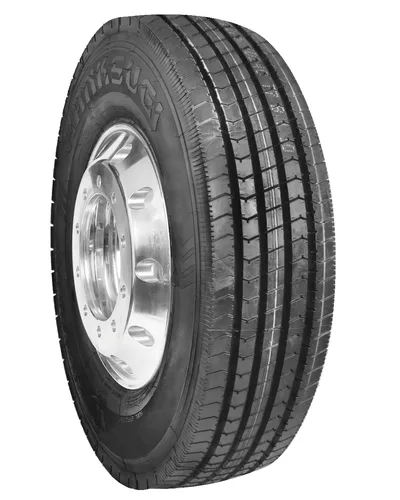
Tire mixed service and all position with rolling tread extra deep and sidewall protection reinforced. Casing retreadable. Engineered for performance in dry and wet in mining haul roads and surfaces of quarry.
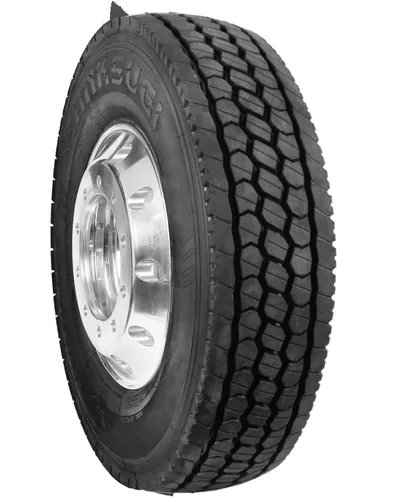
Drive tire regional of open shoulder with stone protection and four decoupling grooves. Wide tread pattern that offers drive in gravel roads loose, resisting the retention of stones in the potholis of the band.
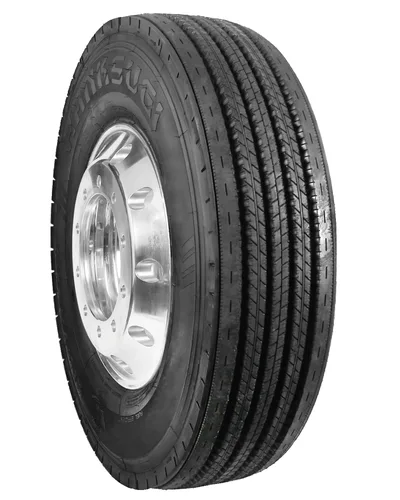
Trailer tire of free-rolling with low rolling resistance for mining trucks that travel highway stretches. Eficiente in fuel consumption in roads public and capaz of handle the transition a roads minings rustic.
The cut damage, chipping and performance (CCC) is the major failure mode of tires in mining operations. Is fundamentally different of the tread wear that limits service life on-highways, and demands to different approach for the selection and management of tires. Understanding the mechanical of CCC damage helps the managers of fleets to choose tires correct and identify changes operating that can extend service life.
When a tire wheel about the edge filudo of a rock, the rock applies a force concentratesdto about a small area of the surface of the band. If the force exceeds the resistance to the torn of the compound of rubber, the rock short the tread creating additional small incision. With contacts repeated about thousands of revolutiones, these cuts propagate and small chips of rubber separan of the surface of the band. A size that the cuts profundizan and connect, chunks more grandis of compound desprenden of the surface of the lug, exposing the structure subyacente a damage accelerated. In cases severos, the performance can remover lugs enteros up to the belt package in ones few hundreds of hours of operation.
The compound of rubber is the factor most important in the resistance to the CCC. The compounds standard of highway tires use formulations more soft that prioritize grip and low rolling resistance about pavement liso. These compounds rasgan easily to the exposese to rocky edges sharp. The compounds grade mining use greater content of rubber natural, systems of loads reinforced and chemical of interlocking optimized for tear resistance instead of hysteresis. The Hanksugi HS76 uses a compound formuside specifically for applications mixed service where resistance to the CCC is critical. The compound balancethe resistance to the torn versus the heat generation to prevent the failure mode secondary by degradation thermal that affects the compounds too hard at low speeds.
The conditions of the haul roads has greater impact in service life of the mining tire that nearly any other variable. A haul road well-maintained with surfaces adequately leveled, drainage controside and cgoldnto appropriate can extend service life between 25 and 40 percent compared with a road descuigiven of the same material. Regar the roads to control the dust also reduce the action abrasive of the particles finas about the surfaces of tires. Roll the crushed material for break the edges sharp before they convierta in itsperficie of the road reduce the action of cut that iniciCCC damage. The mining operations that invest in crews of maintenance vial and cronogramore than leveling consistently report lower costs of tire per ton of material moved that aquellas that tratan the haul roads as algo secondary.
The mining trucks operate at low speeds with heavy loads in slopes. This combination generates internal heat intense within the tire. Unlike the highway driving, where speed creates flow of air that cools the surface of the tire, the mining trucks that move between 24 and 40 km/h generate minimum flow of air of cooling, while the mechanical flex of the tire under maximum load pumps heat continuously toward the rubber. The temperature in the shoulder zone of a mining tire loaded to the maximum can exceed the 105 degrees Celsius in a day hot. A these temperatures, the compounds of rubber begin a degrade, losing tear resistance and becoming more susceptible to CCC damage. The proper inflation pressure is critical for handle the heat in tires mining. The tires with pressure low flex more, generates more heat and fail before. Check the pressure daily and consider TPMS for critical haul trucks.
The cost of tires is one of the five major expenses operating in most of the mining operations y, a difference of the diesel and the labor, the cost of tires is highly controlable through practices operating. The difference between a program of tires well managed and one mal managed in a quarry or mine can representsr between 30 and the 50 percent of the expense total annual in tires.
In mining, the proper tire inflation is not only important, but it is the single practice with the greatest impact in controlling tire costs. A mining tire with 20% below its required inflation pressure generate up to 40% more internal heat. At the loads and speeds of the mining operations, that that excess heat degrades the compound in hours, not km. Check the pressure across positions before each run and address immediately the slow leaks. A TPMS system in a mining truck pays only with the first failure of tire avoided. The target pressures should be set based on the actual weight per axle with the trucks loaded, not in estimates.
Overload is chronic in mining. Shovel operators load by bucket count or visual estimate, and both methods routinely exceed the truck's rated useful load. Even 10% overload concentrates forces on the shoulder zone of the tire and dramatically increases the CCC damage rate by pressing the tread with greater force against the rocky edges. Install onboard scales or load monitors on haul trucks and establish strict limits on qualified load. Record load data per shift and per shovel operator to identify patterns of loading that systematically overload the trucks. The cost of onboard scales is trivial compared with the savings in tires by eliminating chronic overload.
The road maintenance of haul is tire maintenance. A dedicated leveling crew that keeps haul road surfaces smooth, with proper crown and free of loose large rocks, saves more tire costs that any other single investment. Water the roads to control the dust and reduce the surface abrasion. Level the roads on a regular schedule instead of wait for complaints to appear. Where possible, use finer crushed material for the rolling layer of the haul roads to reduce the sharpness of rocky contacts. Limit vehicle speeds on haul roads to reduce the rocky-impact energy on the tread. A well-maintained road can extend service life up to 40%.
A retreadable mining-tire casing can save between 40 and 60 percent of the cost of a new tire. But casings must be retired before the tread wears down to the belt package. In mining, where CCC damage can quickly expose belts in localized zones, is demands monitoring tire conditions more frequently than in highway applications. Check tires weekly looking for deeper cuts that approach the belt depth and remove tires before the localized damage compromises the casing. Label removed tires with the truck number, the position and reason for removal, so the retread sturdy can evaluate each casing with complete operating context. Visit our retreading to learn the details about the acceptance criteria of casings from Hanksugi.
This guide covers the tire sizes of commercial truck used in vehicles minings road, no tires gigbeforef-highway used in haul trucks in tajos. If your mining trucks operate by roads public between sites minings and plants of processing, these are the sizes and models that work a your operation.
| Size of Tire | Application | Models Hanksugi | Details |
|---|---|---|---|
| 11R22.5 | Steer, drive and trailer in haul trucks mining | HS68, HS66 | View Guide of Size |
| 11R24.5 | Drive and trailer in configurations mining heavy | HS68 | View Guide of Size |
| 295/75R22.5 | Drive and trailer in trucks mine-to-highway | HS68, HS66 | View Guide of Size |
| 295/80R22.5 | All position for mining operations in Anguilla | HS76 | View Guide of Size |
| 285/75R24.5 | Drive in vocational mining trucks of tandem axle | HS68 | View Guide of Size |
The tire selection mining depends on the specific rock type, the conditions of the haul road and the truck configuration in its operation. Our fleet solutions team can visit your mine or quarry to evaluate the conditions and recommend the optimal tire configuration for your trucks. Contact us for a tire-cost analysis specific to your site.
Questions common about tires for mining trucks, applications in quarries and resistance to cuts, chips and performances.
The tires for mining trucks use tread compounds resistant to cuts, chips and performances that handle surfaces rocky sharp, tread depths greater for greater service life at low speeds, reinforced sidewall construction that resists impact damage and load indices higher for loads minedes concentratesdas. The compounds of rubber are shapes to resist the action abrasive of the rock crushed, that desgastthe compounds standard of highway tires to a ritmo accelerated.
Mining tire service lives vary dramatically depending on the operation. Surface mining with well-maintained haul roads can reach between 50,000 and 80,000 km. Quarry operations with sharp aggregate typically record between 20.000 and 50,000 km. The major factors are rock sharpness, the conditions of the haul road, the loading practices and the operating speed. Measuring service life in hours of service is typically more meant that in km in mining, since the speeds are low.
The mining trucks road typically use tires 11R22.5, 11R24.5 or 295/80R22.5. These are sizes standard of commercial truck for vehicles Clase 7 and Class 8 that transport material by roads public between mines, quarries and plants of processing. These are different of the huges haul trucks off-highway used within the tajos minings, that use tires gigbefore in sizes as 27.00R49.
The damage CCC occurs when rocky edges sharp cortan the tread rubber, teardo small piezas with each contact. The surface of the road often is computhis by rock crushed with edges angular sharp. A size that wheel the tire, the lugs contactan these edges, accumulating cuts that eventually propagate in chips and performances mayores. The quarries of granite and basalt are particularly aggressive due to the extrema durezto and sharpness of the aggregate.
Yes, tires can be retreaded if the casing passes the inspection. The key is removing tires before the tread wears down to the belt package and keep the proper inflation throughout the service life. A retreadable mining casing can save between 40 and the 60 percent of the cost of a new tire. Visit our retreading for more details.
The most effective strategies are: keep the inflation pressure adequate, match tire selection to mine conditions, keep the haul roads to reduce exposure to sharp rocks, enforce payload limits on the shovel, implement a tire-monitoring program and preserve casings for retreading. The road maintenance by itself can extend service life between 25 and 40 percent. Together, these practices can reduce the tire cost per ton between 30 and 50 percent compared to unmanaged programs.