
High-strength all-position and drive tyres designed for tippers, concrete mixers, collection vehicles and vocational fleets with extreme load demands.
Vocational transport covers the specialised commercial vehicles that build, supply and maintain everyday infrastructure. Tippers hauling aggregate for road construction. Concrete mixers delivering ready-mix to construction sites. Garbage trucks and waste collection vehicles working residential and commercial routes. Utility service trucks maintaining power lines and communications infrastructure. Fire equipment responding to emergencies. These vehicles operate in environments that are fundamentally different from the highway corridors travelled by long-haul and regional trucks, and they need tyres designed for their specific demands.
The defining feature of vocational truck operations is the combination of extreme loads with punishing low-speed manoeuvring. A tipper loaded to 36,000 kg gross vehicle weight making tight turns at a construction site places more stress on its tyres in a single turn than a long-haul truck does in 160 km of straight highway driving. The tyre sidewalls flex under the massive lateral load, the tread scrubs sideways against the road surface, and the whole casing absorbs forces that would be unthinkable in highway service. Add the kerb impacts of navigating narrow residential streets, the thermal cycles of hundreds of stops a day and the exposure to work-site debris, and it becomes clear why standard highway tyres fail quickly in vocational service.
Vocational tyres address these demands through three engineering strategies. First, stronger casing construction with additional body plies and higher-gauge steel belts that support the extreme loads without excessive deflection. Second, harder and more durable tread compounds that resist the lateral scrubbing forces of tight turns and the abrasion of uneven surfaces. Third, reinforced sidewalls with additional rubber thickness and bead-area protection that absorb kerb impacts and impact damage without compromising casing integrity. These features increase the tyre's weight and rolling resistance compared with highway tyres, but in vocational service, where average speeds are low and loads are high, the durability trade-off is necessary and cost-effective.
GAWR (Gross Axle Weight Rating) is the critical specification when choosing vocational tyres. Every axle on a vocational vehicle has a maximum weight rating set by the manufacturer, and the tyres on that axle must be collectively rated to support that weight. For a typical tipper with a tandem drive axle rated at 18,000 kg per axle and dual tyres, each tyre must be rated for at least 4,500 kg at the operating inflation pressure. Selecting tyres with load ratings below the real operating weight causes overheating, accelerated wear and structural failure. A tyre's load rating varies with inflation pressure — the same tyre supports more weight at 120 PSI than at 100 PSI. Always cross-reference your real axle weights (not just the GAWR) against the load/inflation tables for your specific tyre model to confirm adequate capacity.
All-position, drive and steer tyres built for extreme loads, tight turns and the harsh conditions of vocational transport. Crack-resistant compounds with retreadable casings.
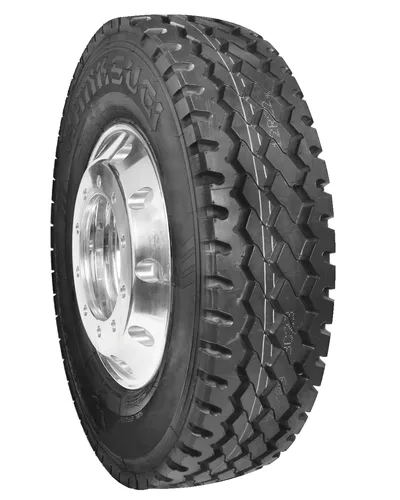
All-position mixed-service tyre with a crack-resistant compound and low heat build-up. 16.5mm tread depth in the main sizes. Ideal for tippers, mixers and vocational fleets that need a single tyre across all positions.
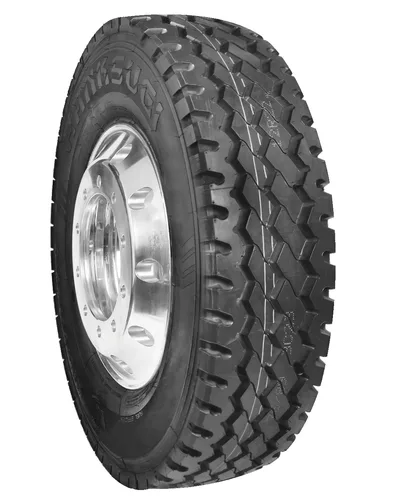
Upgraded all-position tyre with superior traction and a crack-resistant compound for the most demanding vocational applications. Rated for high speed for highway transit between work sites.
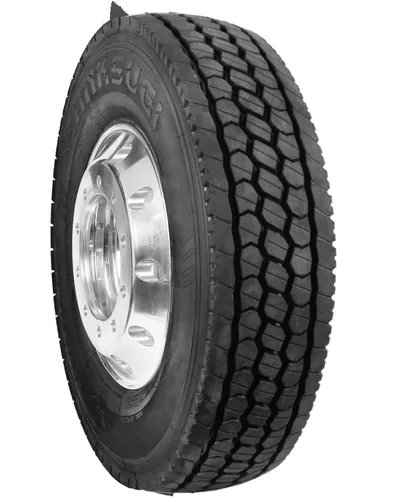
Open-shoulder drive tyre with stone-ejector protection, a wide tread footprint and a compound resistant to cracking and chunking. Delivers traction for tippers and vocational vehicles that move between paved roads and work sites.
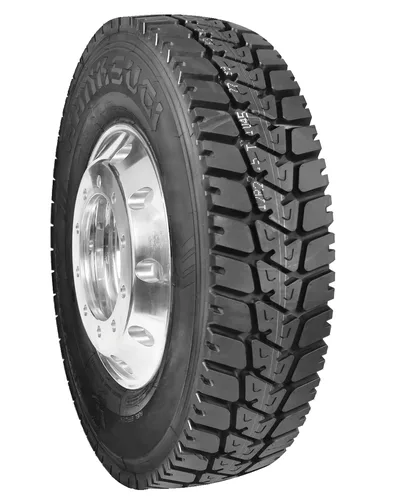
Aggressive drive tyre with an M+S tread pattern and anti-puncture sipes. Deep 20.6mm tread with excellent grip on poor surfaces. Built for the harshest service on vocational drive axles.
Every vocational application has distinct tyre demands. The right tyre depends on the vehicle type, the typical loads, the operating environment and the proportion of on-highway to off-highway kilometres.
Tippers operate at or near maximum gross vehicle weight when loaded, split their time between sealed highways and construction sites, and make tight turns at work sites that stress the steer tyres. The all-position HS64 is the main recommendation for tippers because its crack-resistant compound handles both highway transit and work-site exposure, while its all-position versatility lets fleets stock a single model for steer, drive and support-axle positions. For tippers that operate mainly on rough aggregate surfaces, the HS68 on the drive axle provides additional traction and stone-ejector protection.
Concrete mixers are among the heaviest vocational vehicles, with loaded weights that push the axle loads to the maximum legal limits. The rotating drum raises the centre of gravity higher than a standard truck, creating additional lateral load transfer during turns. Mixer drivers also make tight turns at construction sites while the truck is at maximum weight — a punishing combination for steer tyres. The HS64, with its low heat build-up, handles the thermal stress of heavy-load operation at low speed. For drive axles on mixers that frequently operate on muddy or unsealed surfaces, the HS58 provides aggressive traction with anti-puncture protection against the rebar and debris at concrete pour sites.
Collection trucks are the harshest application in vocational transport. A residential side-loader makes between 800 and 1,200 stops a day, each requiring acceleration, braking and steering input that generates heat and scrubs the rubber off the tread. The loaded weight increases with each stop until the truck reaches the transfer station or the landfill. Kerb contact is constant and inevitable. The HS64 meets the demands of collection with a crack-resistant compound that withstands the thermal cycles of hundreds of daily stops and a sidewall construction that absorbs kerb impacts. The HS64+ KRATO MIX offers improved traction for collection trucks operating in all-weather conditions, with superior grip on wet residential streets.
Utility service trucks — bucket trucks, digger derricks and service vehicles for power, gas and communications companies — operate in both urban environments and remote rural areas. These vehicles carry heavy mounted equipment that creates a high centre of gravity, which amplifies lateral forces during turns. They frequently operate on soft verges and unsealed access roads. The all-position HS64 provides the versatility these mixed-service vehicles need. For utility service trucks that spend significant time on unsealed roads accessing remote infrastructure, the HS68 on the drive axle adds traction on loose surfaces while maintaining adequate highway performance for transit between work sites.
One of the most practical decisions for vocational fleet managers is whether to standardise on a single all-position tyre or use position-specific tyres optimised for each axle. Both strategies have legitimate advantages.
For most vocational operations, the all-position strategy with the HS64 offers the best combination of performance, simplicity and cost control. Fleets operating a single vehicle type in severe conditions (for example, a dedicated collection fleet or a quarry tipper operation) can benefit from position-specific tyres on the most heavily stressed axle positions.
Vocational trucks are harder on tyres than any other category of commercial vehicle. The combination of heavy loads, tight turns, frequent stops, kerb exposure and operation on mixed surfaces creates a maintenance environment where neglect is punished faster and more severely than in highway service. A disciplined tyre maintenance programme is the difference between achieving acceptable life from vocational tyres and burning through tyres at a rate that makes the fleet unprofitable.
Vocational vehicles operate at higher percentages of their maximum load capacity than highway trucks, which means the tyres are closer to their structural limits at all times. Underinflation in vocational service is not just wasteful — it is dangerous. A tyre that is 15% underinflated while loaded to near-maximum weight generates extreme heat in the sidewall flex zone, which can cause a zipper-type rupture — a catastrophic sidewall failure that happens suddenly and can injure anyone standing nearby. Check pressures daily before the first trip. Vocational tyres typically run at higher pressures (110-120 PSI on the steer axle, 100-110 PSI on drive duals) to support the heavy loads. Check your target pressure against the load/inflation tables for your specific tyre model and the real axle weights. Do not assume the pressure on the truck's door placard is correct for your real operating weight — vocational trucks are frequently loaded heavier than the placard specification.
Steer tyres on vocational trucks wear faster than on any other type of truck because constant tight turns under heavy loads scrub the tread aggressively. Uneven wear patterns on vocational steer tyres are common and indicate misalignment, worn steering components, or both. Check steer-axle alignment every 50,000 km for vocational trucks — more often than the 65,000-80,000 km intervals used for highway and regional trucks. Replace worn tie-rod ends, kingpins and drag links promptly, since play in these components lets the steer tyres oscillate during turns, which creates the cupping and diagonal wear patterns that shorten tyre life. Rotating steer tyres side to side every 32,000-40,000 km can even out shoulder wear caused by steering bias (routes that turn more in one direction than the other).
Kerb impacts are a fact of life in vocational transport. Collection trucks strike kerbs on every residential route. Tippers contact kerbs in tight construction areas. Concrete mixers navigate narrow streets with parked cars that force the truck close to the kerb. Every kerb impact damages the tyre sidewall, and the cumulative damage eventually causes structural failure. Train drivers to minimise kerb contact where possible, but accept that some contact is inevitable and select tyres with reinforced sidewall construction. Inspect the sidewalls daily for cuts that expose the casing cords, bulges that indicate internal damage and abrasion patterns that suggest the tyre is regularly contacting a fixed object. Remove immediately any tyre with exposed cords or visible bulges.
Vocational tyre casings can be retreaded, but the success rate depends on how well the tyres were maintained during their original service life. Casings that ran underinflated, absorbed heavy kerb impacts or were run flat are less likely to produce viable retread candidates. To maximise retreading potential: maintain strict inflation discipline, remove the tyres at the correct tread depth before they reach the wear indicators, inspect and repair repairable punctures promptly, and store removed casings properly. The Hanksugi retread programme evaluates vocational service casings with the understanding that they have endured more stress than highway casings, and qualified inspectors assess whether a casing can safely withstand another tread life.
Find the right Hanksugi tyre for your specific operation.
Cut- and chip-resistant tyres for construction operations, quarries and mixed service on unsealed and uneven surfaces.
Low-rolling-resistance highway tyres for interstate operations with SmartWay verification and maximum fuel efficiency.
Open-shoulder drive tyres for LTL, pickup and delivery, and urban distribution routes with frequent stops.
Versatile tyres that perform in steer, drive and trailer positions for fleets that need inventory simplicity.
Common questions about vocational truck tyres, tipper tyres, concrete mixer tyres and collection truck tyres.
A vocational truck tyre is designed for specialised commercial vehicles — tippers, concrete mixers, garbage trucks, utility service vehicles — that operate in demanding environments not dominated by the highway. These vehicles share common challenges: extreme load weights near GAWR limits, frequent tight turns, kerb impacts and transitions between sealed roads and work sites. Vocational tyres use stronger casing constructions, harder compounds and reinforced sidewalls to handle these demands.
Most Class 8 tippers use 11R22.5 or 11R24.5 tyres. The 11R22.5 is the most common size for standard tippers and concrete mixers. The 11R24.5 is sometimes used on three-axle tippers and larger vehicles that need additional load capacity. Radial construction is standard for vehicles that split their time between work sites and public highways.
Collection trucks destroy tyres faster due to a combination of extreme factors: heavy loads at or above GAWR limits, between 800 and 1,200 stops a day with constant acceleration and braking, tight turns at low speed that scrub the rubber off the tread, frequent kerb contact, and operation on residential streets with speed bumps, potholes and debris. The steer-axle tyres are particularly vulnerable because constant tight turns generate extreme lateral forces. Dedicated vocational tyres with harder compounds and reinforced sidewalls extend tyre life significantly compared with standard highway tyres.
Yes, vocational tyres can be retreaded if the casing is in good condition. Vocational service is harder on casings than highway service due to the extreme loads, frequent impacts and thermal stress. The key to retreadable casings is to maintain proper inflation throughout the tyre's life, avoid running underinflated and remove the tyres at the correct tread depth. Hanksugi vocational tyres are built on retreadable casings with robust multi-ply steel belt construction designed to survive vocational work cycles.
GAWR (Gross Axle Weight Rating) is the maximum weight a single axle is designed to bear. When choosing vocational tyres, each tyre on an axle must be rated to support its share of the GAWR at the operating inflation pressure. A tipper with a tandem drive axle rated at 18,000 kg per axle and dual tyres requires each tyre to be rated for at least 4,500 kg. Selecting tyres with insufficient load capacity causes overheating, accelerated wear and structural failure. Always check the tyres' load ratings against the real operating weights, not just the GAWR placard.
It depends on the size and complexity of the fleet. All-position tyres like the Hanksugi HS64 simplify inventory, allow rotation between positions and reduce the complexity of spare tyres. Larger fleets with dedicated tyre workshops can benefit from position-specific tyres optimised for each axle. For most vocational operations, a high-quality all-position tyre provides the best balance of performance, versatility and inventory efficiency.