
High-mileage tyres for urban transit and regional bus fleets in Anguilla. Engineered for passenger safety, low fuel consumption and the lowest cost per kilometre.
Tyres for commercial buses in Anguilla occupy a unique position in the tyre industry. They use the same sizes and general construction as heavy truck tyres, but the operating environment is fundamentally different. Buses carry people, not freight, and that single fact changes everything about the performance a tyre has to deliver. Passenger comfort, predictable handling in emergency manoeuvres and absolute reliability in the face of sudden pressure loss are non-negotiable requirements that go well beyond the typical cost-per-kilometre calculation of freight haulage.
Urban buses in Anguilla make 300 to 500 stops a day on fixed routes, subjecting the tyres to constant cycles of acceleration and braking that generate sustained heat in the tread and sidewall. School buses travel residential streets with tight turns, speed bumps and frequent kerb contact while picking up students. Coaches and regional buses run Anguilla's roads between The Valley, Sandy Ground, West End, Island Harbour and Blowing Point at sustained speeds for hours, demanding a tyre construction that resists heat build-up while delivering a smooth, quiet ride for passengers. Each of these duty cycles subjects the tyre to different stresses, and choosing the right tyre for each application is the difference between maximising mileage and replacing tyres prematurely.
The weight distribution on a bus differs significantly from that of a loaded trailer or a tanker. Buses carry live loads that constantly shift as passengers move, board and alight, creating dynamic weight changes that the tyre must absorb without affecting vehicle stability. A fully loaded 40-foot urban bus can weigh more than 19,000 kg, with the drive axle supporting 10,400 to 11,300 kg and the steer axle supporting 6,350 to 7,260 kg. These weights require tyres with appropriate load capacities and inflation pressures, adjusted to actual operating conditions rather than estimates.
Hanksugi offers a range of tyres suited to bus applications, from the HS24+ all-position tyre with a deep tread for urban transit routes, up to premium steer tyres for coach and regional service. For urban bus fleets in Anguilla, the SUS01 and SUS02 deliver heat-resistant performance, engineered for demanding urban environments. Every Hanksugi bus tyre is built on a retreadable casing with a warranty of up to 3 retreads, allowing fleet operators to extend the total life of their tyre investment across multiple tread applications.
Different bus operations place different demands on tyres. A tyre that excels on a regional coach route can wear out prematurely on an urban transit circuit. Understanding your specific duty cycle is the first step to choosing the right tyre and maximising your tyre budget.
Steer, all-position and urban service tyres adapted to urban transit duty cycles in Anguilla and to regional routes. Engineered for low fuel consumption and a 3-retread warranty.

All-position drive tyre with an extra-deep tread for high mileage on urban transit and school bus routes. M+S rated for all-weather confidence. Robust sidewall construction resists kerb damage.
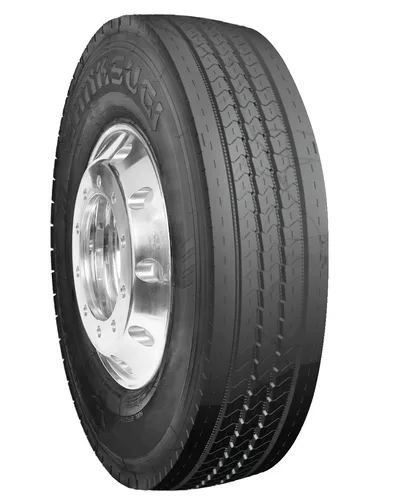
Precision-engineered for urban bus service in the Anguilla market. An advanced protection system guards against kerb damage. The extended-mileage compound handles high-temperature urban environments.
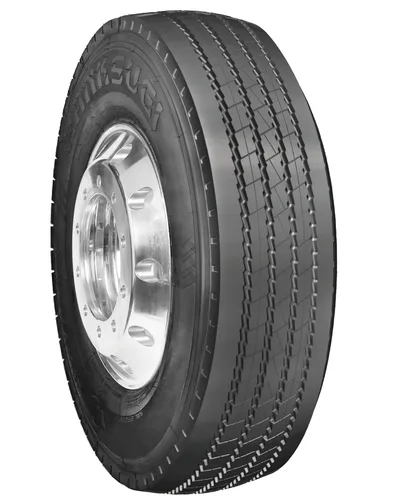
3D sipe design with improved heat dissipation for bus operations with frequent stop-and-start cycles. High load capacity to handle a full passenger load in demanding urban transit service in Anguilla.
Correct tyre sizing is critical for bus safety. Using the wrong size or load capacity on a bus that carries passengers creates liability and safety risks that no fleet manager can afford. Below are the common bus tyre sizes and the Hanksugi models available for each.
| Tyre Size | Common Bus Types | Hanksugi Models | Details |
|---|---|---|---|
| 11R22.5 | Urban transit bus, standard school bus, coach | HS88, HS24+ | See Size Guide |
| 295/75R22.5 | Coach, large school bus, regional bus | HS88 | See Size Guide |
| 12R22.5 | Heavy-duty urban transit bus, articulated bus | HS24+ | See Size Guide |
| 315/80R22.5 | Anguilla urban transit, heavy-duty city bus | SUS01 | See Size Guide |
| 385/65R22.5 | Wide-base urban bus in Anguilla, rapid-transit systems | SUS02 | See Size Guide |
| 295/80R22.5 | Regional bus in Anguilla, long-haul coach | HS28+ Titan Trax | See Size Guide |
Not sure what size your buses need? Check the tyre placard in the driver's door frame or consult the bus chassis manufacturer's specifications. Our tyre specialists can help you identify the right size and load capacity for your fleet.
Municipal transit agencies operate some of the most demanding environments for tyres in commercial transport. A single urban bus on a busy city route can accumulate between 64,000 and 97,000 km a year, enduring operating conditions that would be considered extreme in any other application. Understanding these demands helps fleet managers select the right tyres and set realistic expectations for tyre performance.
Each time an urban bus brakes for a stop, kinetic energy is converted into heat in the brakes and tyres. With 300 to 500 stops a day, drive-position tyres on urban buses experience far more thermal cycling than highway truck tyres. This repeated heating and cooling weakens the bond between the tread and the casing over time and can lead to premature separations if the tyre compound is not designed for this duty cycle. Tyres chosen for urban transit service must use heat-resistant compounds that maintain their structural integrity across thousands of thermal cycles. The Hanksugi HS24+ uses a compound formulation designed to withstand the sustained heat generation of urban service without sacrificing tread life.
Urban buses pull up alongside kerbs at stops dozens of times each shift. Drivers must position the bus close enough to the kerb for passengers to board safely, which means the steer axle tyres on the kerb side suffer repeated contact and scuffing against the concrete faces of the kerb. This abrasion wears away the sidewall rubber over time and can expose the body plies if the tyre lacks adequate sidewall protection. Look for tyres with reinforced sidewall construction and kerb-guard features that add an extra ply of rubber in the vulnerable area between the tread edge and the bead. Rotating steer tyres side to side at regular intervals distributes kerb wear more evenly and extends tyre life.
Urban buses average between 20 and 30 km/h in city service. This low average speed means tyres spend more time under the stress of acceleration and braking relative to kilometres travelled, compared with a highway truck tyre. The constant lateral forces produced by turns also create scrubbing on the tread face that accelerates wear. The tight turning radii in bus yards and maintenance facilities are particularly harsh on steer tyres, creating diagonal wear patterns that shorten tyre life. Maintaining tyre alignment within the manufacturer's specifications and keeping the correct inflation pressure are the two most effective actions an urban transit fleet can take to combat these low-speed wear patterns.
Bus tyres in Anguilla are subject to international tyre safety standards such as FMVSS 119 and ECE R54, which set the minimum performance requirements for tyres used on passenger-carrying vehicles. Beyond baseline requirements, large transit operators often impose their own tyre specifications that exceed the minimums, demanding higher load capacities, specific speed ratings and pressure monitoring systems. When selecting bus tyres in Anguilla, always verify that the tyre meets or exceeds the specific requirements of your operating authority and any contract or insurance mandate that applies to your fleet.
Tyre maintenance on buses is not optional. Carrying passengers raises the stakes of a tyre failure from an inconvenience to a serious safety incident. Transit agencies and school bus operators must implement a structured tyre maintenance programme that goes beyond pre-trip inspections.
Check all tyre pressures before the first dispatch each day using a calibrated gauge. Urban buses should maintain steer tyre pressures between 105 and 120 PSI and drive tyre pressures between 95 and 110 PSI, depending on the specific tyre size and actual axle weights. A tyre that loses even 10 PSI of its target pressure generates significantly more heat during service, and on a transit route with hundreds of stops, that extra heat builds up over the course of the shift. Tyre pressure monitoring systems (TPMS) provide real-time alerts, but they should supplement, not replace, manual gauge checks at the start of each operating day.
Measure the tread depth on all bus tyres at least monthly with a calibrated gauge. Regulations typically require a minimum of 4/32 of an inch on drive-position tyres and 4/32 of an inch on steer-position tyres for commercial vehicles. Many transit operators in Anguilla set internal minimums of 6/32 of an inch to maintain adequate wet traction throughout the year. Record the measurements for each tyre position and track wear rates to predict when replacement is needed. Uneven wear on the tread face indicates alignment problems that must be corrected before they destroy the tyre and the casing.
Rotate bus tyres at 40,000 km intervals to even out wear between the inner and outer duals and between the steer and drive positions where applicable. Drive axle duals should match within 4/32 of an inch of tread depth. Mismatched duals force the smaller tyre to drag while the larger one does more than its share, wasting fuel and accelerating wear on both tyres. When replacing a single tyre in a dual set, always match the new tyre to the tread depth of the remaining tyre. Consider keeping a fleet tyre inventory to make matching easier.
School buses present a unique challenge because they accumulate relatively few kilometres a year but are subject to rubber ageing from seasonal storage. A school bus tyre may have adequate tread depth after 5 years, but the rubber compound degrades with age, losing elasticity and traction. Inspect tyres more than 5 years old annually, paying particular attention to sidewall cracking and tread hardening. Industry best practice recommends removing bus tyres from service after 7 years from the manufacturing date, regardless of remaining tread, to account for age-related degradation. The manufacturing date is encoded in the DOT serial number on the sidewall in WWYY format (week and year).
Choosing tyres for a school bus carries an added responsibility because the passengers are children. Every tyre decision affects the safety margin available to the driver in an emergency, and school bus routes often include conditions that put tyre traction to the test: residential streets covered with leaves in autumn, snow and ice in winter, and gravel shoulders in rural districts.
Most Type C (conventional) and Type D (transit-style) school buses use 11R22.5 tyres. The steer axle takes a single tyre on each side, while the drive axle uses duals. Some smaller Type A school buses built on medium-duty chassis use 225/70R19.5 or 245/70R19.5 sizes. Always verify the tyre size against the bus chassis specifications before ordering replacements.
For school bus steer positions, the HS88 offers predictable, even wear with strong wet traction thanks to its hexagonal central block design. The closed-shoulder design delivers a stable steering response when drivers need to make quick corrections. For drive positions, the HS24+ with its deep tread and M+S rating offers the all-weather traction that school bus operations require. The extra tread depth compensates for the lower annual mileage by ensuring adequate tread life through several school years before age-based replacement becomes necessary.
School bus tyre procurement is often handled through district purchasing departments with tender specifications. When drafting tyre specifications, include minimum tread depth, load capacity, speed rating, M+S capability and a retreadable casing as requirements. Specifying retreadable casings with a warranty of up to 3 retreads allows you to recover value from used tyres through retreading programmes, which can reduce total tyre costs by 30 to 40 percent over the life of the bus. Contact our fleet solutions team in Anguilla for help with specifications and volume pricing on school bus tyre programmes.
Operators of regional and coach buses in Anguilla face a different set of tyre challenges than urban transit fleets. Regional buses run at sustained highway speeds for extended periods between The Valley, Sandy Ground, West End, Island Harbour and Blowing Point, accumulating between 130,000 and 190,000 km a year on routes that span hundreds of kilometres. The tyres must deliver stable, comfortable performance hour after hour while managing the heat generated by sustained operation at 105-120 km/h. Fuel efficiency is also a priority for regional operators, where even a 1% improvement in performance translates into significant savings on a fleet running long-haul routes.
Ride quality directly affects the passenger experience on a coach, and passengers notice the vibration and noise associated with tyres. Rough-riding tyres generate complaints and damage the reputation of regional and coach bus companies. Even-wear tread designs with optimised pitch sequencing reduce interior noise levels and maintain ride comfort as the tyre wears. The HS88 is engineered with even carbon dispersion technology that promotes uniform wear throughout the life of the tyre, maintaining the smooth ride that passengers expect from a premium coach service.
Operators of regional buses in Anguilla should consider the HS28+ Titan Trax in the 295/80R22.5 size for drive positions on long-haul routes. The HATT 3+1 compound system balances the traction needed for hilly terrain with the low rolling resistance that saves fuel on flat highway sections between towns. The heat-resistant ply at the belt edge is particularly important for buses operating in Anguilla's tropical climate, where high ambient temperatures amplify the thermal load on the tyres.
Whatever the application, choosing bus tyres should be treated first as a safety decision and second as a cost decision. The right tyre, with proper maintenance, protects passengers, preserves the operator's reputation and delivers the best total cost of ownership over the life of the bus. Use our cost calculators to compare total cost per kilometre across different tyre options for your bus fleet, or compare tyre specifications side by side.
Common questions about commercial bus tyres, sizes, maintenance and selection.
Most commercial buses in Anguilla use 295/80R22.5, 315/80R22.5 or 11R22.5 tyres. High-capacity urban transit fleets often run 315/80R22.5 and 385/65R22.5 on their rapid-transit vehicles. Regional buses travelling between towns such as The Valley, Sandy Ground, West End, Island Harbour and Blowing Point commonly use 295/80R22.5. Some medium-duty minibuses use 245/70R19.5 or 225/70R19.5 sizes.
Bus tyre replacement intervals depend on the application and operating conditions. Urban buses that run fixed routes normally replace steer tyres every 100,000 to 130,000 km and drive tyres every 80,000 to 110,000 km. School buses, which accumulate fewer kilometres a year but go through seasonal storage, generally replace tyres every 3 to 5 years or when the tread depth reaches 4/32 of an inch in drive and steer positions. Regional buses running intercity routes can reach more than 160,000 km on premium steer tyres. Regardless of remaining tread, bus tyres more than 7 years old from the manufacturing date should be inspected and considered for replacement because of rubber ageing.
Urban transit bus tyres and school bus tyres share the same sizes but face different operating demands. Urban buses run 16 to 20 hours a day on fixed routes with frequent stops, tight turns and constant kerb contact, which calls for tyres with exceptional kerb resistance and heat management. School bus tyres must handle seasonal operating patterns with long periods of inactivity, lower annual mileage and the critical safety requirement of reliable wet and dry traction for transporting students. Urban transit tyres prioritise tread life and heat dissipation, while school bus tyres emphasise all-weather traction and sidewall durability.
Bus tyres use the same sizes and basic construction as commercial truck tyres, but the demands of the application are different. Buses carry passengers, which raises the standard for braking safety, ride comfort and blowout resistance. Bus operations involve more frequent stops, lower average speeds and tighter turning radii than typical truck haulage, creating different wear patterns and heat-generation profiles. Many commercial truck tyres work well on buses when correctly specified for axle weights and the duty cycle, but tyres chosen specifically for the bus application deliver better mileage and lower total cost of ownership.
Yes, premium bus tyre casings can be retreaded once the original tread wears out, provided the casing passes non-destructive testing. Retreading extends the total life of the tyre investment and is a common practice among urban transit and regional fleets in Anguilla looking to reduce tyre costs. Hanksugi tyre casings are engineered with retreadability in mind, using multiple steel-belt ply construction and heat-resistant compounds that preserve casing integrity. A solid Hanksugi bus tyre casing can withstand up to 3 retreads, effectively tripling or quadrupling the value of the original purchase.
Bus tyre inflation pressure depends on the tyre size, the load capacity and the actual axle weight. For the common 11R22.5 size on urban transit and school buses, steer axle tyres normally run between 105 and 120 PSI, while drive axle duals run between 95 and 110 PSI. The correct pressure is determined by consulting the tyre manufacturer's load and inflation tables and adjusting them to the measured weights of the loaded bus axle. Over-inflation creates a harsh ride and centre wear. Under-inflation generates excessive heat and accelerates shoulder wear. Check the pressures daily with a calibrated gauge when the tyres are cold.