
Deep drive tread and reinforced sidewalls for timber haulage on unsealed forestry roads. Built for mud, steep gradients and heavy loads.
Logging is one of the most demanding applications for commercial tyres. Every trip begins with an empty truck climbing steep, unsealed forestry roads up to a landing where the timber is loaded, then descending those same roads at the gross maximum vehicle weight. The roads are narrow, full of ruts, covered in mud or loose gravel depending on the season, and lined with stumps, rocks and debris that threaten the tyre sidewalls at every step. No highway tyre survives in this environment, and even general-purpose mixed-service tyres often fall short on the traction and durability that logging demands.
The dual workload cycle of logging makes tyre selection exceptionally challenging. Loaded logging trucks weigh 36,000 kg or more, exerting maximum stress on every tyre while navigating roads cut through forests with minimal grading. But the same truck creeping down a muddy forestry road at 24 km/h fully loaded must then make an empty return run on the highway at 90-105 km/h, requiring acceptable fuel economy and handling at speeds where aggressive tread patterns generate noise, heat and accelerated wear. The best logging-truck tyres manage this contradiction by delivering enough traction for loaded forestry stretches without sacrificing acceptable performance on the empty highway return.
Mud is the constant adversary. Forestry roads in logging regions experience extended wet seasons where the road surface turns into a mix of clay, organic matter and standing water. Tyres need a self-cleaning tread geometry that throws the mud clear as the wheel turns, rather than packing it into the tread voids and losing traction. Open-shoulder designs with wide lateral channels and independent blocks provide the best mud evacuation, letting the tyre dig through the soft surface and find firm ground below.
Hanksugi offers three tyre models suited to the demands of logging operations. The open-shoulder drive tyre HS68 provides the traction and self-cleaning performance needed on muddy forestry roads, with stone-ejector protection that stops gravel piercing the belt package. The mixed-service all-position tyre HS76 handles the steer position with reinforced sidewall protection against the rocks and stumps that line forestry roads. The drive tyre HS58, with its M+S-rated pattern and puncture-resistant sipes, is built for the worst road conditions found in logging operations.
Logging trucks live in two worlds, and the tyre must perform in both. Understanding the demands of each leg of the trip helps you choose tyres that offer the best compromise between off-road performance under load and efficiency on the empty highway return.
The right approach is to prioritise forestry-road performance under load and accept the compromises on the empty highway return. A tyre that pulls you out of a muddy landing fully loaded is worth more than one that saves 2% in fuel on the empty return. The open-shoulder design of the HS68 offers the best balance: aggressive enough for traction on forestry roads, yet civilised enough for highway speeds on the empty return.
Drive, steer and all-position tyres selected for timber haulage, forestry roads and the dual duty cycle of off-road work under load and the empty highway return.
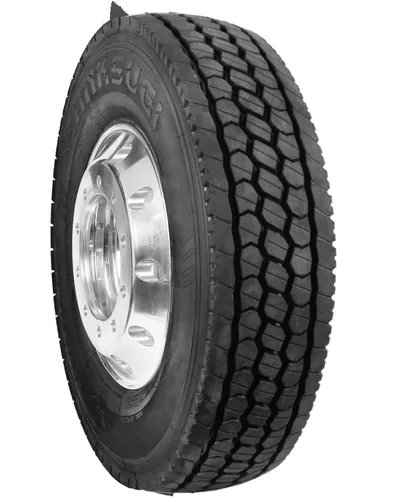
Open-shoulder drive tyre with stone-ejector protection and four decoupling grooves. The self-cleaning tread geometry expels mud on forestry roads. Wide footprint for traction on soft, loose surfaces under heavy timber loads.
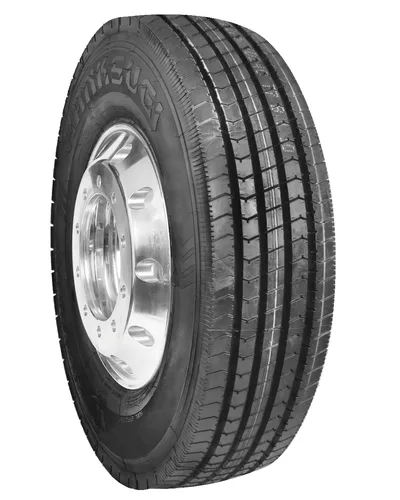
Mixed-service all-position tyre with extra-deep tread and reinforced sidewall protection. Handles the rocks, stumps and debris that line forestry roads while delivering stable steering response on highway sections.
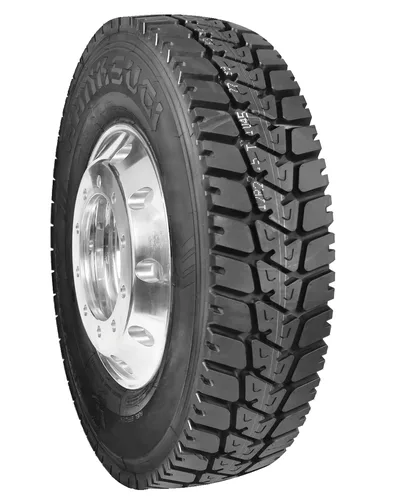
M+S-rated drive tyre with puncture-resistant sipes. Aggressive lug design that delivers maximum grip on muddy landings and unimproved forestry roads where standard drive tyres cannot find traction.
Forestry roads present a unique collection of tyre hazards found in no other transport application. Understanding these hazards and choosing tyres with the right protection features can make the difference between completing a load and calling out a tyre service truck on a remote forestry road with no mobile coverage.
When timber is harvested and a road is cut through the forest, the stumps are typically cut flush with the ground but not removed. Over time, ground erosion exposes these stumps, and they protrude into the traffic lane. A stump that strikes a tyre's sidewall even at moderate speed can cut the sidewall rubber and expose the body plies, leading to a blowout. The roots of fallen trees can spread across the road surface and strike the tyre with enough force to break the bead seal or damage the rim. Tyres with reinforced sidewall construction, such as the HS76, provide extra rubber thickness in the sidewall area that absorbs the impact and resists cuts from stumps and roots.
Forestry roads in high-rainfall regions can receive between 1,500 and 2,500 mm of rain annually. This saturates the road surface and creates deep mud that can immobilise a loaded logging truck. Ruts form from repeated heavy loads, channelling the water and creating troughs that trap the tyres and reduce steering control. The landing areas where the logs are loaded are particularly vulnerable to soft-terrain conditions because the heavy equipment compresses and churns the ground. Self-cleaning tread patterns with wide lateral channels are essential to maintain traction in these conditions. The open-shoulder design of the HS68 lets the mud be thrown clear of the tread as the tyre rotates, keeping the biting edges that grip through the mud down to the firmer surface below.
Forestry road surfaces are typically made up of locally available material, which can include sharp angular rock that cuts and chips tread rubber. In mountainous logging areas, road surfaces may include fractured granite, basalt or shale with edges sharp enough to cut standard tyre compounds. Rocks also lodge in the tread grooves and pierce the rubber towards the belt package if not expelled. Stone-ejector protection features, such as those on the HS68, include platforms in the groove bottoms that stop stones reaching the depth needed to contact the steel belts. Checking the tread grooves for lodged stones at each stop is a simple habit that prevents costly belt damage.
Forestry roads are built to access the timber, not to meet highway gradient standards. Gradients of 10 to 15 percent are common, and some skid roads approach 20 percent on short sections. Descending a 12 percent gradient with 36,000 kg of gross vehicle weight requires sustained braking that generates intense heat in both the brakes and the tyres. The drive tyres absorb a large part of this braking energy, and their internal temperature can rise quickly during a long loaded descent. The correct inflation pressure is critical for managing heat during descents. Under-inflated tyres flex more, generate more heat and are more likely to suffer a belt separation or blowout during or immediately after a long loaded descent. The HS58 uses puncture-resistant sipes that add structural reinforcement beyond the standard belt package, providing an extra margin of safety during high-stress descents.
Every position on a logging truck faces different demands. Matching the right tyre to each position maximises the life of every tyre while ensuring the truck has the traction and handling needed to operate safely on forestry roads.
The steer tyres on a logging truck must offer responsive handling on narrow, winding forestry roads where a missed turn can run the truck off the road and into the trees. At the same time, they need reinforced sidewalls to survive contact with stumps and rocks along the road edge. The mixed-service all-position tyre HS76 provides the sidewall protection logging requires without compromising the steering precision needed for the tight bends of forestry roads. Its deep tread offers extended life despite the low speeds and constant turning that characterise forestry-road driving.
The drive tyres are the workhorse of a logging truck. They must transmit engine torque to the road surface in mud, gravel and loose soil while supporting the maximum axle weights on every loaded run. A loss of traction on a loaded drive tyre climbing a gradient can cause the truck to slide backwards, creating an extremely dangerous situation. The open-shoulder design of the HS68 provides reliable traction in variable conditions with mud-clearing geometry. For the worst conditions, the M+S drive tyre HS58 offers maximum grip with puncture-resistant sipes that protect against the rocks and debris embedded in forestry-road surfaces.
Logging trailer tyres must carry the concentrated weight of a full timber load while following the ruts and mud of forestry roads. Many logging trailers use tandem or tri-axle configurations to distribute the weight of the timber, and each tyre must withstand its proportional share. The trailer tyres also face the same stump and rock hazards as those of the tractor unit, but with less visibility for the driver. For logging trailers that also cover highway sections, an all-position tyre that handles both environments is the better choice. Maintaining the correct inflation on all trailer positions is critical because logging trailers experience greater weight variation than standard freight trailers as the load settles during the haul.
Logging trucks in Anguilla typically use the following commercial tyre sizes. The right size depends on your truck's configuration, the axle capacities and the maximum useful timber payload your operation requires.
| Tyre Size | Application | Hanksugi Models | Details |
|---|---|---|---|
| 11R22.5 | Standard steer, drive and trailer on logging trucks | HS68, HS58 | View Size Guide |
| 11R24.5 | Tandem/tri-axle logging trucks for extra ground clearance | HS68, HS58 | View Size Guide |
| 295/75R22.5 | Drive and trailer positions on logging trucks | HS68 | View Size Guide |
| 285/75R24.5 | Heavy drive-axle configurations on logging trucks | HS68 | View Size Guide |
| 295/80R22.5 | Anguilla logging operations, all-position | HS76 | View Size Guide |
Need help choosing the right tyres for your logging operation? Our fleet solutions team understands the unique demands of timber haulage and can recommend tyre configurations tailored to your specific terrain, timber species and haul distances. Contact us for a consultation.
Logging operations are often carried out in remote areas where tyre service is hours away. A tyre failure on a forestry road means losing a full day of production, plus the cost of emergency service at remote-area rates. Prevention through proper maintenance is far cheaper than emergency repair.
Forestry roads punish under-inflated tyres more than any other surface. The combination of heavy loads, low speeds and uneven terrain generates intense internal heat in tyres already compromised by low pressure. Check all tyre pressures before leaving the yard each morning and carry a portable inflator for adjustments in the field. Set the pressures according to the loaded axle weight, not according to estimates. A well-inflated logging tyre resists impacts better, tracks straighter in ruts and dissipates heat more effectively than one running even 10 PSI low.
While you wait for the loader to build your load, walk around the truck and inspect each tyre sidewall. Look for fresh cuts, scrapes and bulges that indicate impact damage from the last trip. A sidewall cut that does not yet expose the body plies can be monitored, but a cut that shows white or metallic cord means the tyre must be replaced before the next loaded run. Catching sidewall damage early lets you schedule tyre changes in the yard rather than dealing with a blowout on a forestry road.
Gravel from forestry roads lodges in the tread grooves and pierces the rubber towards the steel belts over repeated rotations. A single stone can penetrate to the belt package within a few hundred kilometres if not removed. Check the tread grooves at every inspection stop and remove lodged stones with a tyre probe. This takes two minutes per tyre and prevents the belt damage that would destroy the casing's retread potential. Tyres with stone-ejector features, such as the HS68, include raised platforms in the groove bottoms that help stop stones reaching critical depth.
A retreadable logging tyre casing saves between 40 and 60 percent of the cost of a new tyre. But logging conditions are hard on casings, so preserving them takes deliberate effort. Remove the tyres before the tread wears down to the belt package, even if localised wear patterns create thin spots while the rest of the tread still has life. Maintain the correct inflation throughout the tyre's service life. Store removed casings in a cool, dry place, away from sunlight and sources of ozone. Label every casing with the truck number, position and reason for removal. Visit our retreading page to learn about Hanksugi's casing acceptance criteria and retreading options.
Common questions about tyres for logging trucks, forestry-road performance and choosing tyres for timber haulage.
Logging trucks need tyres with aggressive tread patterns for traction on unsealed forestry roads, reinforced sidewall construction to resist damage from rocks and stumps, and adequate tread depth for service life under heavy loads at low speed. Drive positions need open-shoulder or deep-lug designs that self-clean mud. Steer positions need responsive handling for narrow forestry roads. Every position needs sidewall protection against the hazards that line forestry roads.
Most logging trucks in Anguilla use 11R22.5, 295/80R22.5 or 11R24.5 tyres. The 295/80R22.5 and 11R22.5 are the most common sizes on the market. The 11R24.5 provides slightly more ground clearance for soft conditions. Match the tyre size to your truck manufacturer's specifications and the actual axle weights at the maximum useful timber payload.
Mud fills the tread voids and stops the tyre gripping the road surface. Tyres with open-shoulder designs and wider groove spacing self-clean more effectively because the mud is thrown clear as the tyre rotates. Tyres with an M+S rating and aggressive open-shoulder patterns provide the best traction in mud. Maintaining the correct inflation is especially important in muddy conditions because under-inflated tyres deform and trap mud instead of expelling it.
Logging truck tyres suffer sidewall damage from rocks, stumps and debris that line the narrow forestry roads. Stumps cut near the surface snag the sidewall as the truck passes. Rocks at the road edge present sharp edges at sidewall height. Tyres with reinforced sidewall construction resist this damage better than standard tyres. Inspect the sidewalls before and after each forestry-road run.
Yes, if the casing is in good condition. The retread acceptance rate for logging casings is lower than for highway casings because of the sidewall damage and the exposure to punctures. Maximise the retread potential by using tyres with reinforced sidewalls, maintaining the correct inflation, removing the tyres before the tread reaches the belts and inspecting the casings promptly. A retreadable casing saves between 40 and 60 percent of the cost of a new tyre.
Logging trucks face a unique dual-duty challenge. Prioritise tyres for loaded forestry-road conditions, since that is where traction failures and tyre damage are most dangerous. Accept that aggressive patterns will be slightly less fuel-efficient on the empty highway return. The HS68 on the drive axle and the HS76 on the steer axle offer the best compromise between off-road performance under load and efficiency on the empty highway.