
Versatile tires engineered for steer, drive, and trailer positions. Simplify fleet inventory with one tire that handles every axle.
All-position commercial truck tires represent a category of tire engineering designed to perform acceptably well on every axle of a tractor-trailer combination. While dedicated steer, drive, and trailer tires are each optimized for a single set of demands, all-position tires are engineered with tread patterns, compounds, and constructions that balance the competing requirements of all three positions into a single versatile product.
The concept behind all-position tires is straightforward: a tread pattern that provides enough lateral stability for steer axle use, sufficient traction for drive axle applications, and low enough rolling resistance for efficient trailer deployment. Achieving this balance requires careful engineering trade-offs. The tread design typically features a multi-rib pattern with siping that provides steering precision on the front axle while still offering grip when mounted on drive positions. The compound must resist the high-heat generation of drive positions while maintaining the low hysteresis needed for fuel-efficient trailer rolling.
In the commercial trucking industry, all-position tires are sometimes referred to as free axle tires, particularly in Latin American and European markets. The term free axle denotes an axle that is not powered by the drivetrain and does not provide steering input, essentially a non-drive, non-steer axle that could be a tag axle, pusher axle, or any axle on a trailer. Because free axle positions share characteristics with both trailer and steer positions, tires designed for free axle deployment are inherently all-position capable.
Hanksugi's all-position lineup spans both the USA and LATAM markets. The HS66 serves as the primary all-position solution for North American fleets, available in 11R22.5, 295/75R22.5, 11R24.5, and 285/75R24.5. For Latin America, the HS76, HS56, and HS26+ Zeus Grip provide all-position versatility with compound technologies developed specifically for LATAM road conditions and operating environments.
All-position tires offer fleet managers practical advantages that go beyond tire performance alone. The operational and financial benefits of an all-position tire strategy can transform how you manage your tire inventory and maintenance operations.
Stock a single tire model instead of separate steer, drive, and trailer SKUs. Fewer part numbers mean less warehouse space, lower carrying costs, and simpler purchasing decisions. Mid-sized fleets typically reduce tire inventory costs by 20-30% with an all-position strategy.
Deploy the same tire on any axle of any truck in your fleet. This eliminates the delay of waiting for position-specific tires to arrive and allows maintenance teams to install whichever tire is available, reducing downtime and improving truck utilization.
Every additional tire SKU adds complexity to your operation. All-position tires consolidate your tire program, simplifying everything from vendor management and contract negotiation to technician training and replacement scheduling.
When a tire fails on the road, the replacement process is faster when any tire in stock fits any position. All-position tires eliminate the risk of a truck being stranded because the nearest dealer does not have the correct position-specific tire available.
All-position tires can be rotated between positions as they wear, maximizing total casing mileage. A tire that starts on a steer axle can be moved to a trailer position as tread wears, extracting maximum value before retreading.
Tracking cost per mile is easier when you are measuring one tire model across all positions. Consistent data enables better forecasting, more accurate budgeting, and clearer comparisons when evaluating tire performance.
Choosing between all-position and dedicated position tires depends on your fleet's operating profile, routes, and priorities. Neither approach is universally superior. The right choice depends on how your trucks operate day to day.
All-position tires are the strongest choice for regional fleets, pickup-and-delivery operations, and mixed-service applications where trucks encounter varied road conditions and make frequent stops. These operations benefit most from inventory flexibility and the ability to deploy any available tire on any axle without delay. Fleets with diverse equipment types, from straight trucks to tractor-trailers, also benefit because a single all-position tire can serve across the entire fleet regardless of vehicle configuration.
Dedicated position tires make more sense for long-haul fleets running consistent routes at sustained highway speeds. In pure long-haul applications, a dedicated steer tire's optimized rib pattern provides superior directional stability over hundreds of thousands of highway miles. A dedicated drive tire's deeper tread and aggressive lug pattern delivers better traction in hill-climbing and winter conditions. A dedicated trailer tire's ultra-low rolling resistance compound provides the maximum possible fuel savings when the tire's only job is to roll efficiently behind the tractor.
| Factor | All-Position Tires | Dedicated Position Tires |
|---|---|---|
| Inventory complexity | Low (1 SKU) | High (3+ SKUs) |
| Steer performance | Good | Excellent |
| Drive traction | Good | Excellent |
| Trailer fuel economy | Good | Best-in-class |
| Deployment flexibility | Any axle, any truck | Position-specific only |
| Best for | Regional, P&D, mixed service | Long-haul, dedicated routes |
| Emergency replacement | Any tire fits | Must match position |
Many fleet managers use a hybrid approach: dedicated steer and drive tires on line-haul tractors, combined with all-position tires on regional trucks and as emergency spares. This strategy captures the performance advantages of dedicated tires where they matter most while maintaining the flexibility of all-position tires where operational simplicity is the priority.
All-position and free axle tires for the US market. Versatile deployment across steer, drive, and trailer positions with low rolling resistance performance.
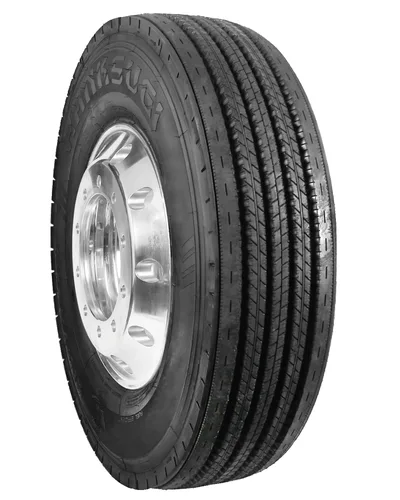
Low rolling resistance with superior abrasion resistance and fuel economy optimization. Engineered for multi-position deployment on steer, drive, and trailer axles across your fleet.
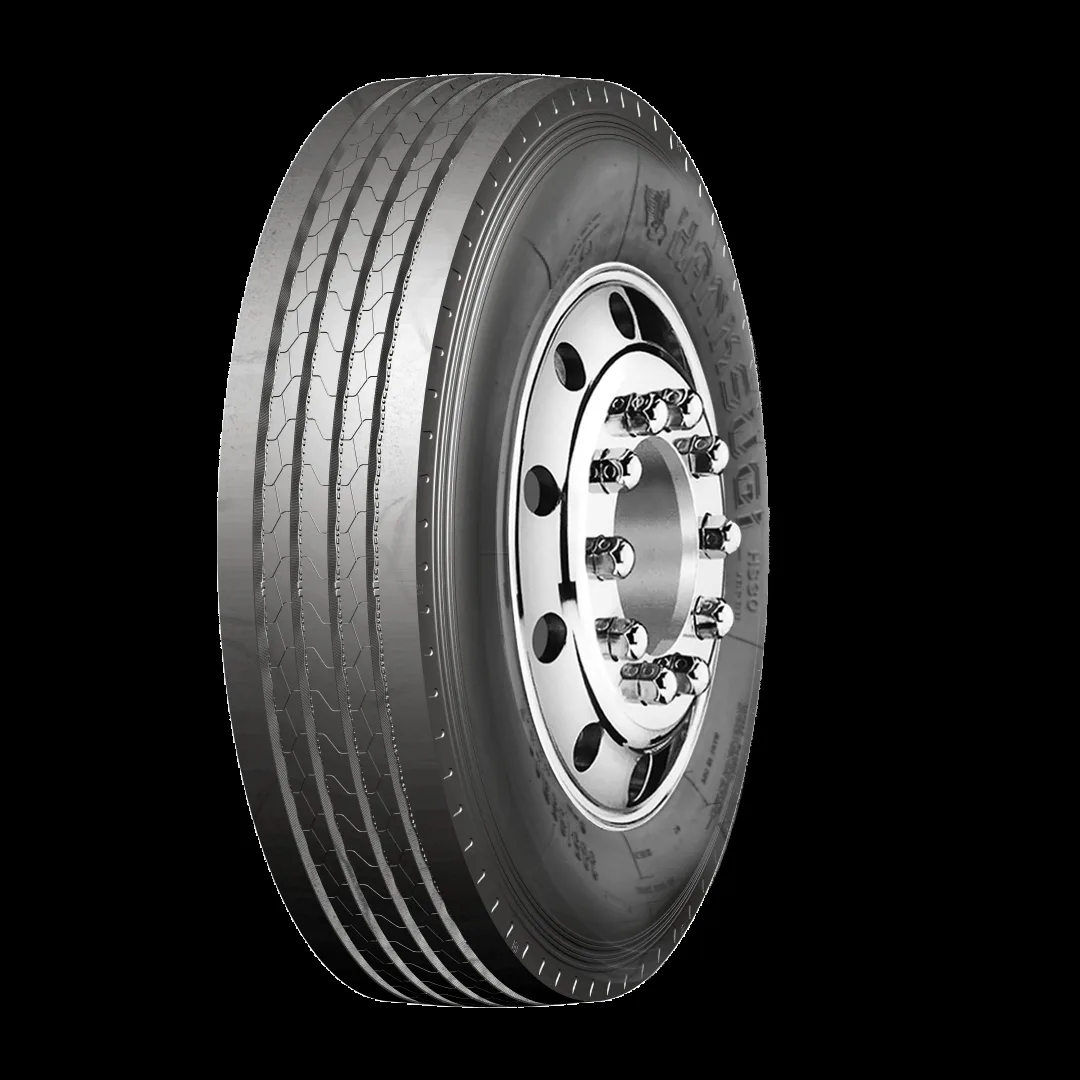
3D wavy tread groove technology with optimized footprint and uniform carbon dispersion. Versatile free axle design handles trailer, tag axle, and pusher axle positions with ease.
All-position tires certified for Central and South American markets featuring Zeus Grip technology, retreadable casings, and mixed-surface capability.
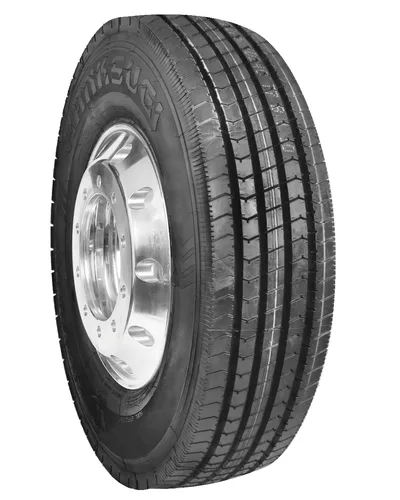
Wet and dry performance with retreadable casing construction. Extra deep 15.5mm tread delivers extended mileage across all axle positions on Latin American road networks.
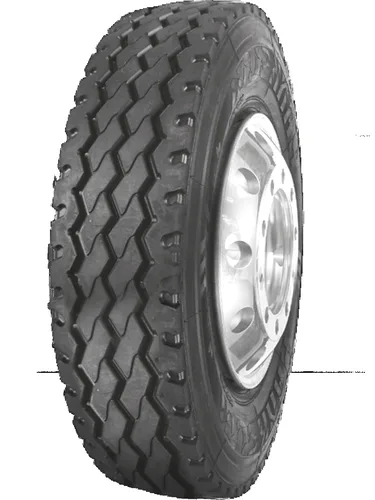
Mixed surface capability with superior grip and traction for demanding all-position applications. 18mm tread depth and high-speed handling deliver versatility on any axle.
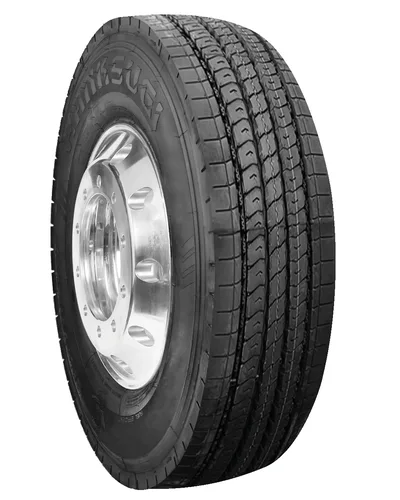
Proprietary Zeus Grip compound technology delivers exceptional low rolling resistance with the grip and durability required for all-position deployment. Advanced fuel-saving design for LATAM operations.
Hanksugi all-position tires are available in the most common commercial truck sizes across USA and LATAM markets. Use the table below to find the right model for your fleet, or visit our tire size directory for complete specifications.
| Tire Size | Market | Model | Position Capability |
|---|---|---|---|
| 11R22.5 | USA | HS66 | Steer, Drive, Trailer, Free Axle |
| 295/75R22.5 | USA | HS66 | Steer, Drive, Trailer, Free Axle |
| 11R24.5 | USA | HS66 | Steer, Drive, Trailer, Free Axle |
| 285/75R24.5 | USA | HS66 | Steer, Drive, Trailer, Free Axle |
| 255/70R22.5 | USA | HS26 Plus | Free Axle, Trailer |
| 295/80R22.5 | LATAM | HS76, HS26+ Zeus Grip | All Position, Free Axle |
| 13R22.5 | LATAM | HS56 | All Position |
All-position tires require attentive maintenance to deliver their full performance potential across every axle position. Because these tires serve multiple roles, maintenance practices must account for the specific demands of whichever position the tire currently occupies.
The optimal inflation pressure for an all-position tire varies depending on where it is mounted. On a steer axle, the tire carries the weight of the engine and cab and must maintain precise directional control. On a drive axle, the tire transmits engine torque and must manage heat from both load and traction forces. On a trailer position, the tire must maintain stability under varying loads. Always follow the tire manufacturer's inflation recommendations for each specific position. For Hanksugi all-position tires, consult the load and inflation table on the individual product page or contact our technical support team for position-specific guidance. Check pressure weekly with a calibrated gauge when tires are cold.
One of the key advantages of all-position tires is the ability to rotate them between positions to maximize total casing life. A common strategy is to begin a tire's life on the steer axle, where it experiences the most controlled and even wear. As tread depth decreases and the tire is no longer optimal for steering precision, it moves to a drive or trailer position where it can continue delivering value with reduced tread depth. This rotation approach can extend total tire mileage by 15-20% compared to leaving tires in a single position until they reach minimum tread depth. Document every rotation in your fleet management system to track wear patterns and optimize rotation intervals.
All-position tires should be measured for tread depth at three points across the tire face: both shoulders and the center. This three-point measurement reveals whether the tire is wearing evenly, which indicates correct inflation and alignment. On steer positions, watch for one-sided shoulder wear that indicates alignment issues. On drive positions, monitor for center wear from overinflation or edge wear from underinflation. On trailer positions, check for diagonal wear patterns that indicate axle misalignment. Replace any all-position tire when tread depth reaches 4/32 inch on steer positions or 2/32 inch on drive and trailer positions.
Because all-position tires may serve on steer, drive, or trailer axles at different points in their life, maintaining proper alignment on every axle is critical. A misaligned steer axle causes rapid and uneven wear that reduces the tire's remaining service life when it is later moved to another position. Similarly, a misaligned trailer axle creates diagonal wear patterns that compromise the tire's performance regardless of where it is subsequently deployed. Verify alignment on all axles during every tire replacement event and at least annually as part of your preventive maintenance program.
Common questions about all-position tires, fleet inventory strategy, and Hanksugi's all-position lineup for USA and LATAM markets.
An all-position commercial truck tire is engineered to perform on any axle: steer, drive, or trailer. These versatile tires balance the directional stability needed for steering, the traction required for drive axles, and the low rolling resistance important for trailers. Fleet managers use them to simplify inventory by stocking a single tire model that deploys wherever it is needed.
All-position tires work well as replacements for dedicated position tires in regional and mixed-service applications. However, dedicated steer tires provide superior directional stability for sustained highway use, and dedicated drive tires deliver deeper tread and more aggressive traction for severe winter or hill-climbing conditions. All-position tires offer strong value when operational flexibility and inventory simplification outweigh the need for maximum position-specific performance.
All-position tires allow fleets to stock fewer SKUs since a single model covers steer, drive, and trailer positions. This reduces warehouse space, lowers carrying costs, simplifies purchasing, and decreases the risk of obsolete stock. Technicians can install any tire on any axle without waiting for position-specific models. For mid-sized fleets, consolidating to an all-position strategy can reduce tire inventory costs by 20-30%.
Zeus Grip is Hanksugi's proprietary compound technology featured in the HS26+ Zeus Grip model for the LATAM market. The compound delivers exceptionally low rolling resistance while maintaining the grip and durability needed for all-position deployment. Available in 295/80R22.5 with an 18PR load rating and 16.5mm tread depth, Zeus Grip represents Hanksugi's advanced fuel-saving technology for Latin American operations.
Hanksugi all-position tires cover a wide range of sizes. For the USA: the HS66 comes in 11R22.5, 295/75R22.5, 11R24.5, and 285/75R24.5, while the HS26 Plus is available in 255/70R22.5. For LATAM: the HS76 comes in 295/80R22.5, the HS56 in 13R22.5, and the HS26+ Zeus Grip in 295/80R22.5.
Yes. Hanksugi all-position tires are built with retreadable casings. The HS76 specifically features a retreadable casing design, and the HS66 and HS26 Plus also support retreading when casings are properly maintained. Retreadable casings extend the total life of the tire investment by two retreading cycles, significantly reducing cost per mile over the tire's complete lifecycle.