
A closed shoulder tread pattern is a drive tire design where a continuous rib of rubber runs along both outer edges of the tread surface, connecting the outermost tread blocks into an unbroken band. Unlike an open shoulder design where lateral grooves extend all the way to the tire's edge, the closed shoulder keeps the shoulder area solid. This creates a lower void ratio -- the percentage of the tread surface occupied by grooves -- which fundamentally changes the tire's performance characteristics in favor of highway stability, reduced noise, and longer tread life.
The continuous shoulder rib serves multiple engineering purposes. First, it distributes ground pressure more evenly across the full width of the contact patch, preventing the concentrated stress points that cause irregular wear on separated shoulder blocks. Second, it reduces the volume of air that passes through the tread grooves at highway speeds, which directly lowers road noise for improved driver comfort during long-haul operations. Third, it minimizes the aerodynamic drag created by groove openings at the tire's edge, contributing to lower rolling resistance and measurably better fuel economy over sustained highway miles.
From a fleet management perspective, closed shoulder drive tires represent the optimal specification for any operation where highway mileage dominates the duty cycle. The design philosophy prioritizes the metrics that matter most for long-haul profitability: cost per mile, fuel consumption per loaded mile, and predictable tread wear that allows planned tire rotations and retread cycles. The Hanksugi HS88, the company's best-selling drive tire, exemplifies this approach with its hexagonal center block design paired with a closed shoulder that has earned the trust of line-haul fleets across the United States.
Unbroken rubber band along both tread edges distributes pressure evenly and eliminates the concentrated stress that causes irregular wear.
Sealed shoulder blocks limit air passage through grooves, lowering road noise at highway speeds for improved driver comfort on long hauls.
Reduced void ratio and uniform contact patch minimize friction, directly improving fuel economy for fleets measuring cost per mile.
Uniform ground pressure across the full tread width promotes predictable, even wear that extends usable tread life and supports retread programs.
Closed shoulder drive tires are engineered for duty cycles where the truck spends the overwhelming majority of its operating time on paved, well-maintained road surfaces. The continuous shoulder design sacrifices some off-road capability in exchange for measurable advantages in fuel economy, tread life, noise reduction, and highway stability. Here are the primary applications where closed shoulder tires deliver their maximum value:
Long-haul trucking operations that cover 100,000 to 150,000 highway miles per year represent the ideal application for closed shoulder drive tires. These trucks operate primarily on interstate highways where road surfaces are smooth, consistent, and well-maintained. The reduced rolling resistance of a closed shoulder pattern compounds over hundreds of thousands of miles, delivering fuel savings that directly impact the bottom line. The even wear characteristics mean tires reach their minimum depth uniformly across the tread, maximizing the miles extracted from each tire before removal for retreading. The Hanksugi HS88's 29/32nds tread depth provides extended mileage that long-haul operators demand.
Dedicated lane operations that run the same routes repeatedly on interstate highways benefit enormously from closed shoulder drive tires. The predictable wear patterns allow fleet managers to plan tire rotations and replacements with high accuracy, reducing unplanned downtime and roadside service calls. The lower noise levels also improve driver satisfaction and reduce fatigue on routes that may involve 10 to 11 hours of continuous highway driving. For fleets running team-driver operations where the truck stays on the highway around the clock, closed shoulder tires are the only sensible specification for the drive axle.
Any fleet that tracks and manages fuel cost as a primary KPI should be spec'ing closed shoulder drive tires for highway-dominant routes. The difference in rolling resistance between closed and open shoulder designs translates to measurable fuel savings across a tire's service life. For fleets that participate in EPA SmartWay or state-level fuel efficiency programs, closed shoulder drive tires contribute to the lower rolling resistance scores that these programs incentivize. The Hanksugi HS88's uniform carbon dispersion compound further optimizes fuel efficiency by controlling the molecular distribution of carbon in the rubber to minimize energy loss through heat generation.
Modern fleet management focuses on total cost of ownership rather than purchase price alone. Closed shoulder drive tires like the HS88 deliver their value through extended tread life, lower fuel consumption, predictable wear patterns that support retread programs, and durable casings that withstand multiple retread cycles. When you calculate the cost per mile including original tread life, fuel savings, and retread value, closed shoulder drive tires consistently outperform alternatives on highway-dominant routes. Use our cost per mile calculator to model the savings for your specific operation.
When evaluating closed shoulder drive tires for your fleet, three technical specifications have the greatest impact on total cost of ownership and operational performance. Understanding these metrics helps you select the tire that will deliver the best return for your specific highway application.
Tread depth on closed shoulder drive tires directly determines how many highway miles the tire will deliver before reaching minimum legal depth. Deeper treads provide more rubber to wear through, extending the service interval between tire changes. However, deeper tread also increases the tire's rolling resistance slightly because there is more rubber flexing with each revolution. The engineering challenge is balancing tread depth against rolling resistance to optimize total cost per mile. The Hanksugi HS88 delivers 29/32nds of tread depth, one of the deepest in its category, because Hanksugi's uniform carbon dispersion compound mitigates the rolling resistance penalty that normally accompanies deep treads. This means the HS88 provides maximum mileage without the fuel economy compromise that cheaper deep-tread alternatives impose.
Rolling resistance is the energy lost as a tire deforms and recovers with each revolution. On a long-haul truck covering 120,000 miles per year, drive tire rolling resistance directly affects fuel consumption. Closed shoulder tires inherently have lower rolling resistance than open shoulder alternatives because the continuous shoulder rib creates a more uniform contact patch with less flexing at the tread edges. Within the closed shoulder category, rolling resistance varies based on compound formulation, casing construction, and tread geometry. The HS88's uniform carbon dispersion technology controls the molecular distribution of carbon within the rubber compound, reducing hysteresis (energy lost as heat) and delivering measurable fuel savings over the tire's service life.
Fuel accounts for approximately 30 to 40 percent of a long-haul trucking operation's total operating cost. Drive tires are the single largest tire-related factor in fuel consumption because they transmit the engine's power to the road surface. Closed shoulder drive tires reduce fuel consumption through multiple mechanisms: lower rolling resistance from the continuous shoulder rib, reduced aerodynamic drag from fewer groove openings, and optimized rubber compounds that minimize heat generation. For a fleet running 500 trucks at 6 miles per gallon, even a 2 percent improvement in fuel economy from better drive tire selection represents substantial annual savings. When spec'ing closed shoulder drive tires, ask your tire supplier for rolling resistance data and compare it against your current tires to model the potential fuel savings.
Hanksugi manufactures two closed shoulder drive tire models that serve different markets and operating conditions. Both feature the continuous shoulder rib design that defines the closed shoulder category, combined with aggressive center tread patterns that maintain drive axle traction on paved surfaces.
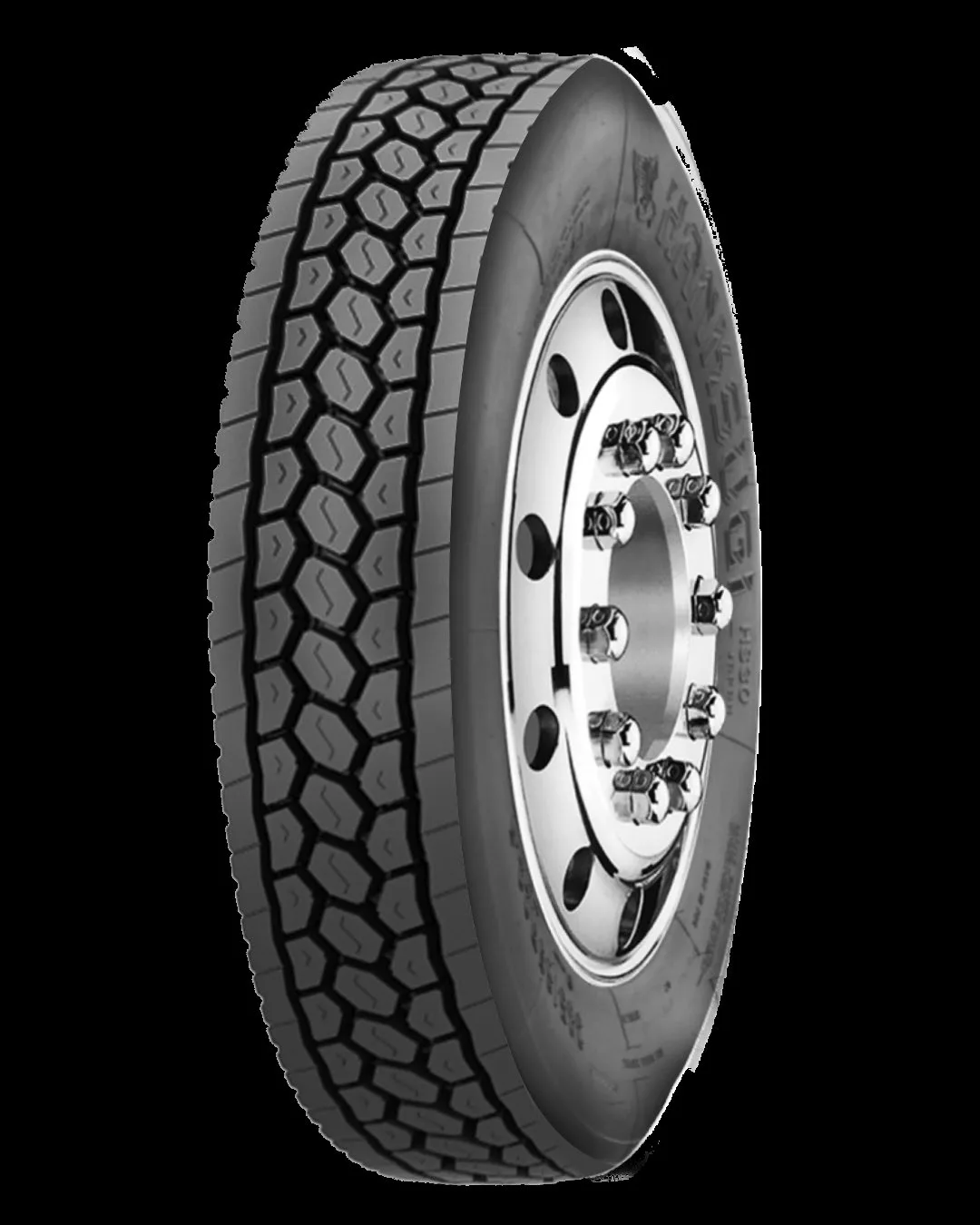
Hanksugi's best-selling drive tire. Aggressive hexagonal center block design provides outstanding traction and rigidity. Closed shoulder ensures stability in line-haul situations. Uniform carbon dispersion compound for longer tread life and lower rolling resistance.
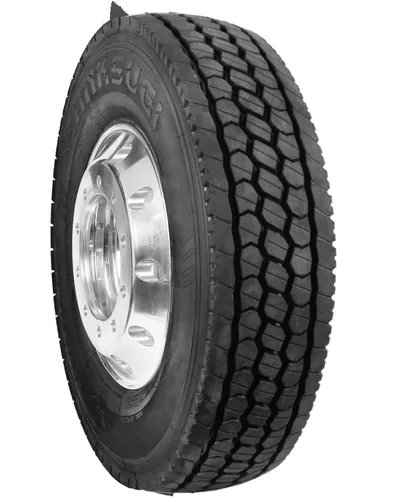
Stone grip protection with wide tread design and four decoupling grooves. Closed shoulder architecture delivers stability and even wear for regional and long-distance operations across Latin America.

The FARAON features a proprietary deepened tread pattern with optimized ground pressure distribution for uniform wear and super-high mileage. Designed for professional fleets demanding uncompromising performance.
The Hanksugi HS88 has earned its position as the most popular drive tire in the Hanksugi lineup through consistent performance across thousands of fleet operations in the United States. What distinguishes the HS88 from competing closed shoulder drive tires is the combination of its hexagonal center block design with its closed shoulder architecture.
The hexagonal-shaped tread blocks interlock to minimize block movement under load. When a tire's tread blocks shift and flex independently, they create uneven wear patterns that reduce tire life and compromise handling. The HS88's interlocking hexagonal geometry distributes ground pressure evenly across the entire footprint, preventing the heel-toe wear, center wear, and shoulder wear patterns that plague tires with less sophisticated tread architectures. This even wear distribution means the HS88 reaches minimum tread depth uniformly, extracting maximum mileage from every tire.
The closed shoulder complements the center block design by providing the directional stability that long-haul operations demand. At sustained highway speeds, the continuous shoulder rib maintains consistent contact with the road surface, preventing the lateral movement that causes erratic handling and premature shoulder wear. Combined with Hanksugi's uniform carbon dispersion compound technology, which controls the molecular distribution of carbon within the rubber for lower rolling resistance and extended tread life, the HS88 delivers a total package that fleet managers measure in cost per mile.
| Size | Ply Rating | Tread Depth | Tread Width | Max Load S/D | Pressure | L&S Index | Weight |
|---|---|---|---|---|---|---|---|
| 11R22.5 | 16 PR | 29/32nds | 8.89 in | 6,610 / 6,005 lbs | 120 PSI | 146/143L | 126.59 lbs |
| 11R24.5 | 16 PR | 29/32nds | 8.89 in | 7,160 / 6,610 lbs | 120 PSI | 149/146L | 135.87 lbs |
| 295/75R22.5 | 16 PR | 29/32nds | 9.37 in | 6,610 / 6,005 lbs | 120 PSI | 146/143L | 125.07 lbs |
Understanding the trade-offs between closed and open shoulder drive tires ensures you spec the right tire for each route and application in your fleet. Neither design is universally better; each excels in its intended operating environment. For a comprehensive breakdown, read our in-depth comparison guide.
| Characteristic | Closed Shoulder | Open Shoulder |
|---|---|---|
| Highway Fuel Economy | Excellent -- continuous shoulder reduces rolling resistance and drag | Moderate -- higher void ratio increases friction at highway speeds |
| Tread Life on Highway | Excellent -- even pressure distribution maximizes mileage | Good -- separated blocks may wear faster at sustained speeds |
| Road Noise | Low -- sealed shoulder limits air passage for quieter operation | Higher -- more air passing through open grooves at speed |
| Traction on Loose Surfaces | Moderate -- continuous rib limits bite on gravel and dirt | Excellent -- aggressive block edges grip loose material |
| Wet Weather Performance | Good -- adequate for highway rain conditions | Superior -- wide grooves evacuate water quickly |
| Self-Cleaning Ability | Limited -- closed edges can trap material | Excellent -- debris ejects naturally through open channels |
| Best Application | Long-haul OTR, interstate highway, high-mileage routes | Regional, mixed service, on/off highway, construction |
| Hanksugi Models | HS88, HS58 | HS68, HS84, HS28+ Titan Trax |
The table below lists every size available across Hanksugi's closed shoulder drive tire lineup. Click any size to view detailed specifications, load ratings, and compatible models on the dedicated size page.
| Tire Size | Model | Ply Rating | Tread Depth | Application | Market |
|---|---|---|---|---|---|
| 11R22.5 | HS88 | 16 PR | 29/32nds | Long Haul Highway | USA |
| 11R24.5 | HS88 | 16 PR | 29/32nds | Long Haul Highway | USA |
| 295/75R22.5 | HS88 | 16 PR | 29/32nds | Long Haul Highway | USA |
| 11R22.5 | HS58 | 16 PR | 20.6 mm | Traction / M+S | LATAM |
| 11R24.5 | HS58 | 16 PR | 20.6 mm | Traction / M+S | LATAM |
| 13R22.5 | HS58 | 18 PR | 24 mm | Traction / M+S | LATAM |
| 315/80R22.5 | HS58 | 18/20 PR | 23 mm | Traction / M+S | LATAM |
| 12R22.5 | HS58 MAGNUS | 18 PR | 23 mm | Traction / M+S | LATAM |
Need help selecting the right closed shoulder drive tire for your operation? Use our tire cost calculator to compare cost per mile, or contact our team for a fleet consultation.
Our CEO explains how to identify real vs fake DOT codes on commercial truck tires. Every Hanksugi tire carries genuine DOT certification.