
Closed shoulder highway, open shoulder regional, and mixed-service drive tires engineered for maximum traction and mileage.
Commercial truck drive tires are mounted on the powered rear axles of Class 6 through Class 8 commercial vehicles, where they serve the critical function of transmitting engine torque to the road surface. Every time a driver accelerates, climbs a grade, or brakes on a descent, the drive tires are the contact point between several hundred horsepower and the pavement. This demanding role requires a fundamentally different tire design compared to steer or trailer positions.
Drive tire tread patterns are deeper and more aggressive than steer or trailer patterns, with larger void areas between tread blocks that allow the tire to grip the road under power. Tread depths on commercial drive tires typically range from 20/32 to 30/32 of an inch (or 20mm to 24mm in metric specifications), providing a deep reservoir of usable rubber that extends tire life under the high-scrub conditions of the drive axle. The tread compound must balance two competing requirements: it needs to be soft enough to conform to road irregularities for traction, yet hard enough to resist the accelerated wear that comes from being the powered axle.
The shoulder design of a drive tire determines its application category. Closed shoulder drive tires connect the outer tread blocks with a continuous rib, creating a smooth edge that reduces rolling resistance and promotes even wear on highway surfaces. Open shoulder drive tires use independent blocks separated by lateral grooves that bite into wet, snowy, or loose surfaces for enhanced traction in variable conditions. Mixed-service drive tires combine elements of both designs with reinforced compounds that resist cutting and chipping on unpaved job sites.
For fleet managers, drive tire selection has a direct and measurable impact on fuel economy, traction safety, and cost per mile. The drive position consumes tires faster than steer or trailer positions due to the torque forces involved, making tire cost a significant line item in fleet operating budgets. Hanksugi drive tires are engineered with uniform carbon dispersion compounds, optimized block geometry, and multi-layer steel belt construction to deliver industry-competitive mileage across all drive tire categories while maintaining the traction performance that keeps trucks moving safely in all conditions.
The most important decision when selecting a commercial truck drive tire is choosing between closed shoulder and open shoulder tread designs. Each architecture serves a distinct operating profile, and selecting the wrong one can cost thousands in excess fuel consumption or premature tire replacement.
For a detailed comparison with specific mileage data and application recommendations, see our full guide: Closed Shoulder vs Open Shoulder Drive Tires — Complete Fleet Guide.
SmartWay-verified drive tires covering every application: closed shoulder highway, open shoulder regional, and mixed-service on/off road. The HS88 is the best-selling commercial truck drive tire in the Hanksugi USA lineup.
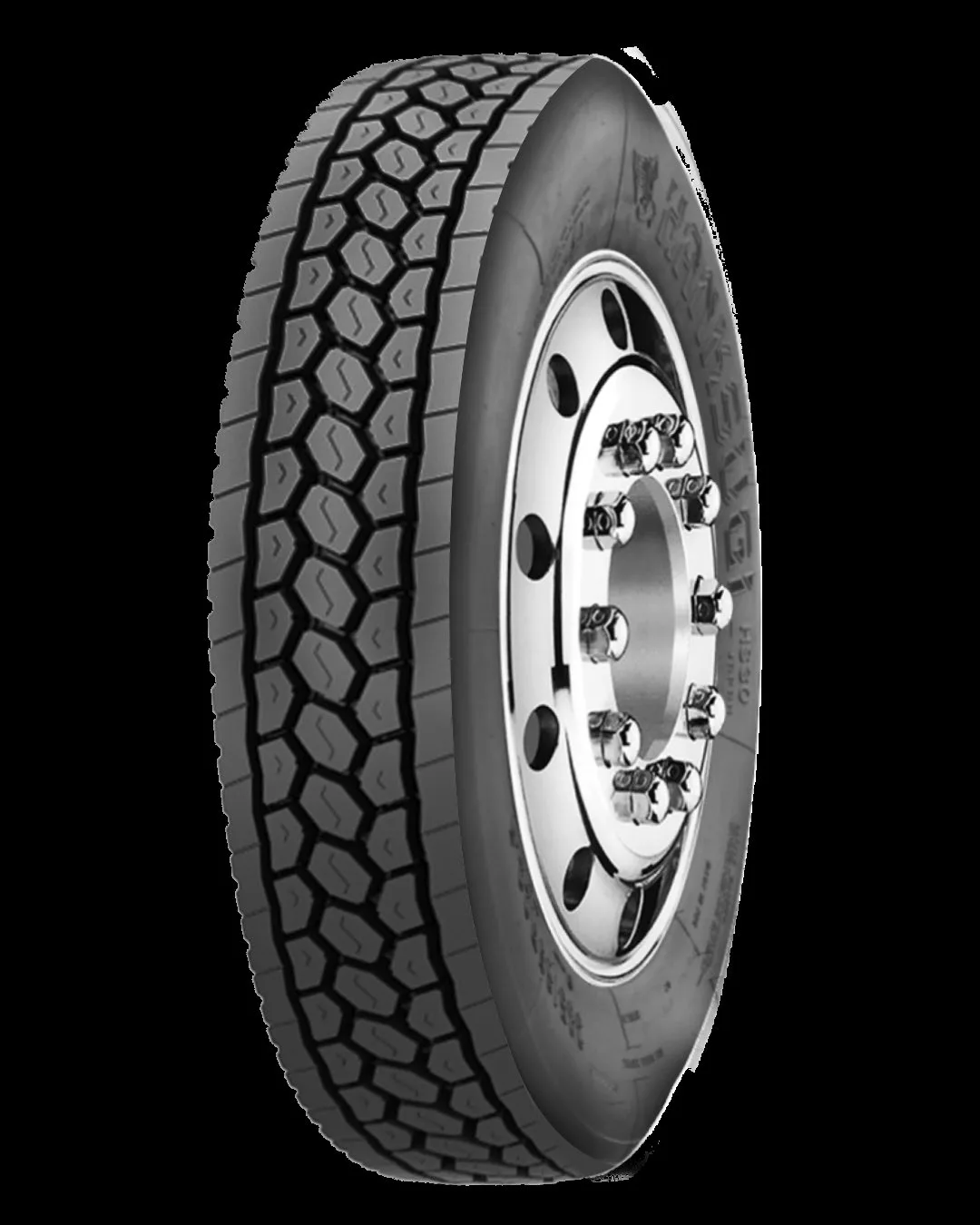
Best-selling closed shoulder highway drive tire. Hexagonal center block design with uniform carbon dispersion for outstanding traction and extended mileage. 29/32 tread depth.
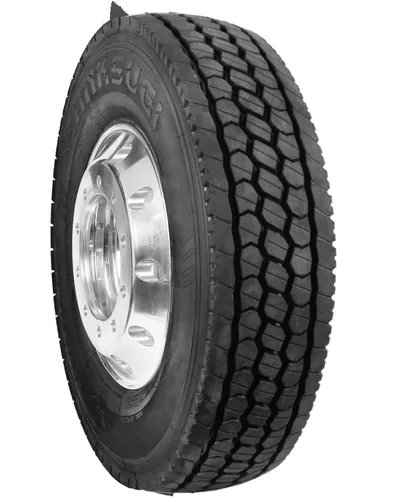
Open shoulder regional drive tire with stone grip protection, wide tread footprint, and four decoupling grooves for superior wet and all-weather traction.
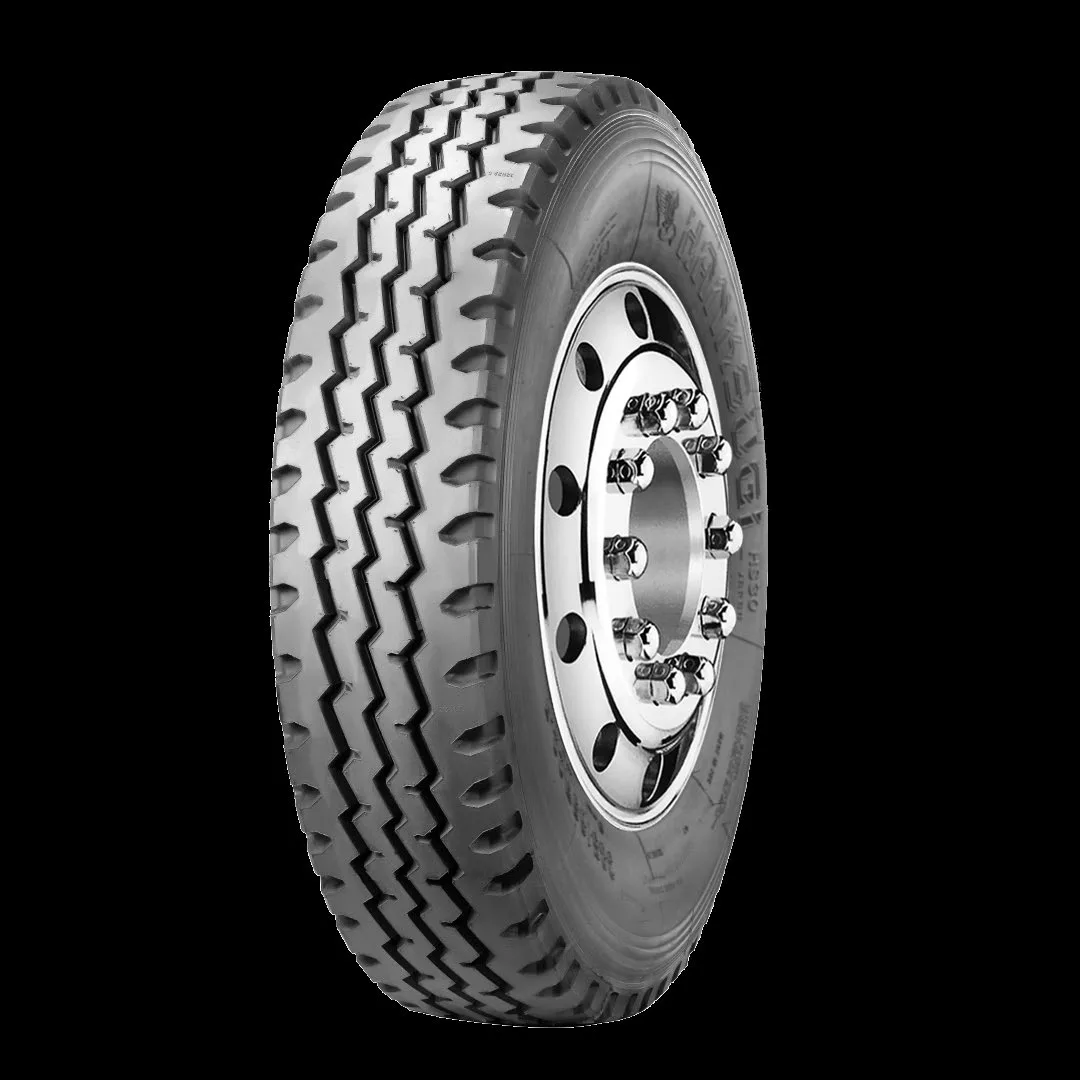
Mixed-service drive tire with advanced cut-and-chip resistant compound and stone defense features. Built for demanding on/off road duty cycles across highways and job sites.
Hanksugi LATAM drive tires feature HATT compound technology and are engineered for the demanding road infrastructure across Mexico, Brazil, Chile, Colombia, and Argentina. NOM and INMETRO certifications are standard across the lineup. The 295/80R22.5 size is the primary focus for long-distance LATAM operations.
The HS28+ Titan Trax is Hanksugi's flagship drive tire for the Latin American market, featuring the proprietary HATT 3+1 compound system. This multi-layer compound architecture combines three functional rubber layers -- a traction-optimized surface layer, a fuel-efficient base layer, and a heat-resistant belt edge layer -- with an additional protective layer that guards against stone penetration and casing damage. At 22mm tread depth with 18PR load rating and M speed rating, the Titan Trax is built for the 295/80R22.5 size that dominates LATAM drive-axle applications. Fleets operating long-distance corridors report strong traction performance alongside competitive fuel economy numbers, a combination that is difficult to achieve with conventional single-compound drive tires.
View HS28+ Titan Trax Details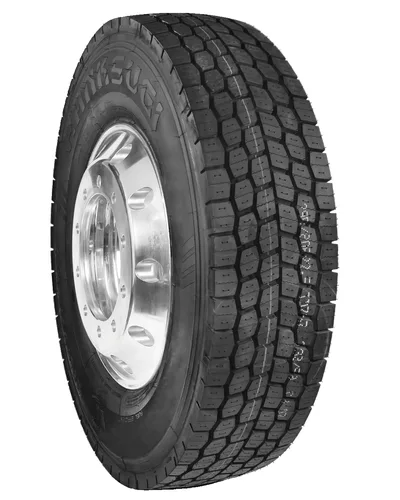
HATT 3+1 compound for drive-axle traction and fuel economy optimization. The flagship LATAM drive tire for 295/80R22.5 applications.
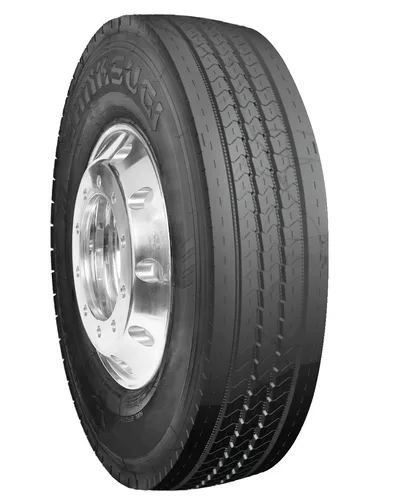
Precision-engineered drive tire with advanced protection system and extended mileage compound. 16.5mm tread depth for LATAM long-distance operations.
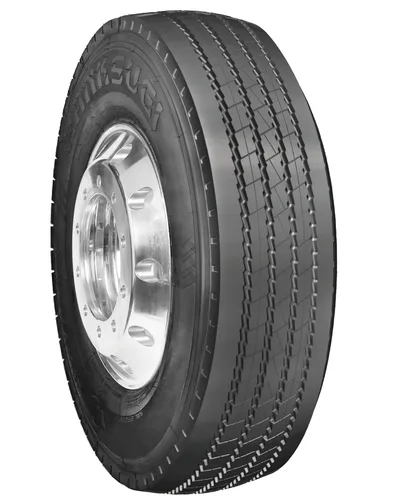
3D blade design with enhanced heat dissipation and high load capacity. Engineered for demanding LATAM drive-axle applications on the 385/65R22.5 size.
Hanksugi drive tires cover the major commercial truck sizes used across the Americas. Click any size below for detailed specifications, load ratings, and model availability for the drive position.
| Tire Size | Market | Available Models | Tread Depth | Details |
|---|---|---|---|---|
| 295/75R22.5 | USA | HS88, HS68 | 20.6-29/32" | View Size Guide |
| 11R22.5 | USA | HS88, HS68, HS84 | 19-29/32" | View Size Guide |
| 11R24.5 | USA | HS88, HS68, HS84 | 19-29/32" | View Size Guide |
| 285/75R24.5 | USA | HS68 | 20.6/32" | View Size Guide |
| 295/80R22.5 | LATAM | HS28+ Titan Trax | 22mm | View Size Guide |
| 315/80R22.5 | LATAM | SUS01 | 16.5mm | View Size Guide |
| 385/65R22.5 | LATAM | SUS02 | 16mm | View Size Guide |
The right drive tire depends on where and how your trucks operate. Each application places different demands on the drive axle, and selecting a tire matched to your duty cycle delivers the best combination of mileage, traction, and cost per mile.
Interstate fleets covering 100,000+ miles annually need closed shoulder drive tires that maximize fuel economy and deliver even wear over the long miles between tire changes. The HS88 with its hexagonal center block design and 29/32" tread depth is the primary recommendation for this application. Low rolling resistance compounds pay for themselves in fuel savings over the life of the tire, and the even wear pattern extends removal mileage compared to open shoulder alternatives. Prioritize SmartWay verification and uniform wear potential when evaluating drive tires for long-haul routes.
Regional routes involve frequent stops, turns, and exposure to varied weather conditions that demand more from a drive tire than straight-line highway running. Open shoulder drive tires like the HS68 provide the lateral traction and wet grip needed for urban and suburban driving. The wider void areas evacuate water faster during rain events, and the independent shoulder blocks bite into the road surface during low-speed maneuvering at loading docks and delivery stops. Accept the small rolling resistance trade-off in exchange for enhanced safety margins and all-weather confidence.
Construction, energy, aggregate, and waste hauling operations split time between paved highways and unpaved job sites. Mixed-service drive tires like the HS84 use cut-and-chip resistant compounds that withstand the sharp rocks, gravel, and debris found at work sites without sacrificing acceptable highway performance. Stone ejection features in the tread grooves prevent stone drilling that can penetrate the belt package and cause premature casing failure. Choose mixed-service drive tires when more than 20% of your route miles are on unpaved or construction surfaces.
Latin American long-distance operations face road infrastructure that varies significantly between primary highways and secondary routes. The HS28+ Titan Trax for the 295/80R22.5 size uses HATT 3+1 compound technology to balance traction and fuel economy across these mixed conditions. LATAM fleets should prioritize retreadable casings and compound durability, as the higher average temperatures and road surface variability in the region place additional thermal stress on drive tire compounds. NOM and INMETRO certification ensures compliance across the major LATAM markets.
Drive tires operate under the highest stress of any axle position on a commercial truck. The combination of engine torque, braking forces, and load weight means that drive tires wear faster and are more sensitive to maintenance neglect than steer or trailer tires. Following a disciplined maintenance program protects your drive tire investment and maximizes the miles you get from each set.
Check drive tire inflation pressure weekly with a calibrated gauge when tires are cold. Drive tires that are under-inflated by even 10% experience dramatically increased sidewall flexing, which generates heat that degrades the casing and accelerates tread wear on the shoulders. Over-inflation concentrates wear in the center of the tread and reduces the contact patch area, compromising traction. Most commercial drive tires in dual configuration run between 100-110 PSI for standard loads. Always reference the load/inflation tables specific to your tire model and actual axle weights. Consider investing in automatic tire inflation systems (ATIS) for trailer axles and TPMS for drive positions to catch pressure loss before it causes damage.
Drive axle duals must be matched within 4/32 of an inch (approximately 3mm) in tread depth. When dual tires have mismatched circumferences, the smaller tire drags while the larger tire does most of the work. This creates a constant scrubbing condition that accelerates wear on both tires and wastes fuel. Measure tread depth on all drive positions every 25,000 miles and rotate tires between inner and outer dual positions to equalize wear. When replacing a single drive tire in a dual set, always match the replacement to the remaining tire's tread depth. Running a new tire against a half-worn mate shortens the life of both.
Pre-trip and post-trip inspections should include a visual check of all drive tires. Look for stones lodged in the tread grooves, which can drill into the belt package and cause belt separations if not removed. Check for sidewall damage from road debris or curb strikes, and watch for signs of brake heat damage such as discoloration or hardening of the tread compound near the inner dual. Irregular wear patterns on the drive axle, such as heel-toe wear on the tread blocks, often indicate suspension or driveline alignment issues that should be corrected before they destroy a set of drive tires.
Premium drive tire casings from Hanksugi are designed to be retreadable, extending the total life of the tire across multiple tread applications. After the original tread reaches minimum depth, the casing should be inspected by a qualified retreading facility using shearography or other NDT methods to verify belt and body ply integrity. A sound casing can typically support two retreads in the drive position, effectively tripling the value of the original tire purchase. When sending casings for retreading, remove them before the tread wears into the wear indicators to preserve maximum casing thickness and retread potential.
Common questions about commercial truck drive tires, application selection, and maintenance.
A commercial truck drive tire is engineered for the powered rear axles of Class 6, 7, and 8 trucks. These tires must transmit engine torque to the road surface while providing traction for acceleration, hill climbing, and braking. Drive tires feature deeper tread patterns with wider voids than steer or trailer tires, designed to grip the road under power. They come in closed shoulder (highway), open shoulder (regional), and mixed-service configurations for different operating environments.
Closed shoulder drive tires have a continuous rib connecting the outer tread blocks, creating lower rolling resistance and even wear for highway applications. Open shoulder drive tires have independent shoulder blocks separated by lateral grooves, providing better traction in rain, snow, and loose surfaces for regional and all-weather operations. Closed shoulder tires are best for long-haul interstate fleets, while open shoulder tires are preferred for regional routes with varied weather exposure.
Commercial truck drive tires typically range from 20/32 to 30/32 inch tread depth for US-specification tires, or 20mm to 24mm for LATAM metric specifications. The Hanksugi HS88 features a deep 29/32 inch tread, while the HS28+ Titan Trax has 22mm depth. Deeper tread provides longer tire life and better traction but slightly increases rolling resistance. Drive tires should be removed when tread depth reaches 4/32 of an inch, the federal minimum for drive-position tires on commercial vehicles.
While a drive tire will physically fit a trailer axle, it is not recommended for new tire installations. Drive tires have deeper, more aggressive tread patterns that increase rolling resistance on a free-rolling trailer axle, reducing fuel economy. Trailer-specific tires are designed with shallower, more efficient tread patterns that lower per-mile fuel costs. Some fleets move partially worn drive tires to trailer positions to extract remaining mileage, which is acceptable practice, but installing new drive tires on trailers is not cost-effective.
Yes, Hanksugi USA drive tires carry EPA SmartWay verification, confirming they meet low rolling resistance standards for fuel efficiency. The HS88 closed shoulder highway drive tire is SmartWay verified and is the best-selling drive tire in the Hanksugi USA lineup. SmartWay verification indicates that the tire's tread compound and pattern geometry have been independently tested and certified to reduce fuel consumption compared to non-verified alternatives, potentially saving fleets 2-4% on fuel costs over the life of the tire.
Titan Trax is Hanksugi's advanced drive tire compound technology featured on the HS28+ Titan Trax model for the LATAM market. It uses HATT 3+1 compound formulation, which combines three functional rubber layers with an additional protective layer to optimize both traction grip and fuel economy simultaneously. The three functional layers handle surface grip, base stability, and belt-edge heat resistance, while the fourth protective layer guards against stone penetration. The Titan Trax compound is engineered specifically for the 295/80R22.5 size used across Latin American long-haul corridors.