
SmartWay-verified front axle tires engineered for directional stability, low rolling resistance, and maximum steer-position mileage.
Commercial truck steer tires are purpose-built for the front axle of Class 6 through Class 8 commercial vehicles, where they serve as the primary interface between the driver's steering input and the road surface. Unlike drive or trailer tires that focus on traction or load carrying, steer tires must excel at directional control, precise handling response, and even tread wear across the entire contact patch.
The front axle of a commercial truck bears a unique combination of forces. During straight-line highway cruising, steer tires must maintain low rolling resistance to contribute to overall fuel economy. During turns, lane changes, and braking events, these same tires must handle significant lateral and longitudinal forces without scrubbing or developing irregular wear. This dual requirement drives a fundamentally different engineering approach compared to other axle positions.
Modern commercial steer tires feature multi-rib tread patterns with continuous circumferential grooves that provide hydroplaning resistance and directional stability. The rib edges are typically siped with micro-cuts that create additional biting edges for wet traction without compromising the structural rigidity needed for precise steering feel. Shoulder design plays a critical role as well: reinforced shoulder ribs resist the scrubbing forces that cause the characteristic shoulder wear pattern seen on poorly designed steer tires.
For fleet operators, steer tire selection directly affects driver safety, fuel economy, and total cost of ownership. A well-chosen steer tire on a properly aligned front axle can run 150,000 miles or more before reaching minimum tread depth. Combined with a retreadable casing, the long-term value proposition of a premium steer tire far exceeds its initial purchase price. Hanksugi steer tires are engineered with uniform carbon dispersion compounds and optimized footprint geometry to deliver industry-leading performance across all of these critical dimensions.
Selecting the correct steer tire for your fleet or truck requires evaluating several interdependent factors. The wrong choice can lead to premature irregular wear, higher fuel consumption, and compromised handling. Here is what to consider before purchasing:
Your steer tire must carry the maximum front axle weight your truck encounters, including payload variations. Commercial steer tires are available in load ranges from 14PR to 20PR depending on the size. For standard US Class 8 applications, 16PR load range tires in 295/75R22.5 or 11R22.5 cover the majority of front axle weights. Overloading a steer tire accelerates shoulder wear and increases the risk of casing failure.
Steer tires account for roughly 25-30% of a truck's total rolling resistance. Selecting a low rolling resistance steer tire with SmartWay verification can reduce per-mile fuel cost by 1-3%. Hanksugi steer tires use advanced silica-infused compounds that minimize hysteresis energy loss during rolling, directly lowering fuel consumption without sacrificing grip.
Steer tires are the most alignment-sensitive position on a commercial truck. Toe, camber, and caster misalignment show up as diagonal wear, feathered edges, or one-sided shoulder wear within the first 20,000 miles. Choose a steer tire with reinforced rib geometry and anti-feathering sipe design if your fleet struggles with alignment-related wear. Regular alignment checks every 50,000 miles protect your steer tire investment.
Traditional rib-pattern steer tires use straight circumferential grooves for maximum directional stability and the lowest rolling resistance. Siped steer tires add micro-cuts across the rib surface to improve wet braking and cold weather traction. For long-haul highway operations in mild climates, a clean rib pattern is the most fuel-efficient choice. For regional fleets operating in varied weather conditions, a siped design provides a safety advantage worth the small rolling resistance trade-off.
Long-haul interstate fleets should prioritize low rolling resistance and maximum mileage. Regional delivery operations that involve frequent stops, turns, and urban driving need steer tires with enhanced shoulder durability and wet grip. Vocational applications on mixed surfaces benefit from deeper tread depth and wider grooves for debris ejection. Match the tire specification to the routes and duty cycles your trucks actually run.
SmartWay-verified steer and free-axle tires for the US market. Engineered for long-haul fuel efficiency and high-mileage steer position performance on Class 8 trucks.
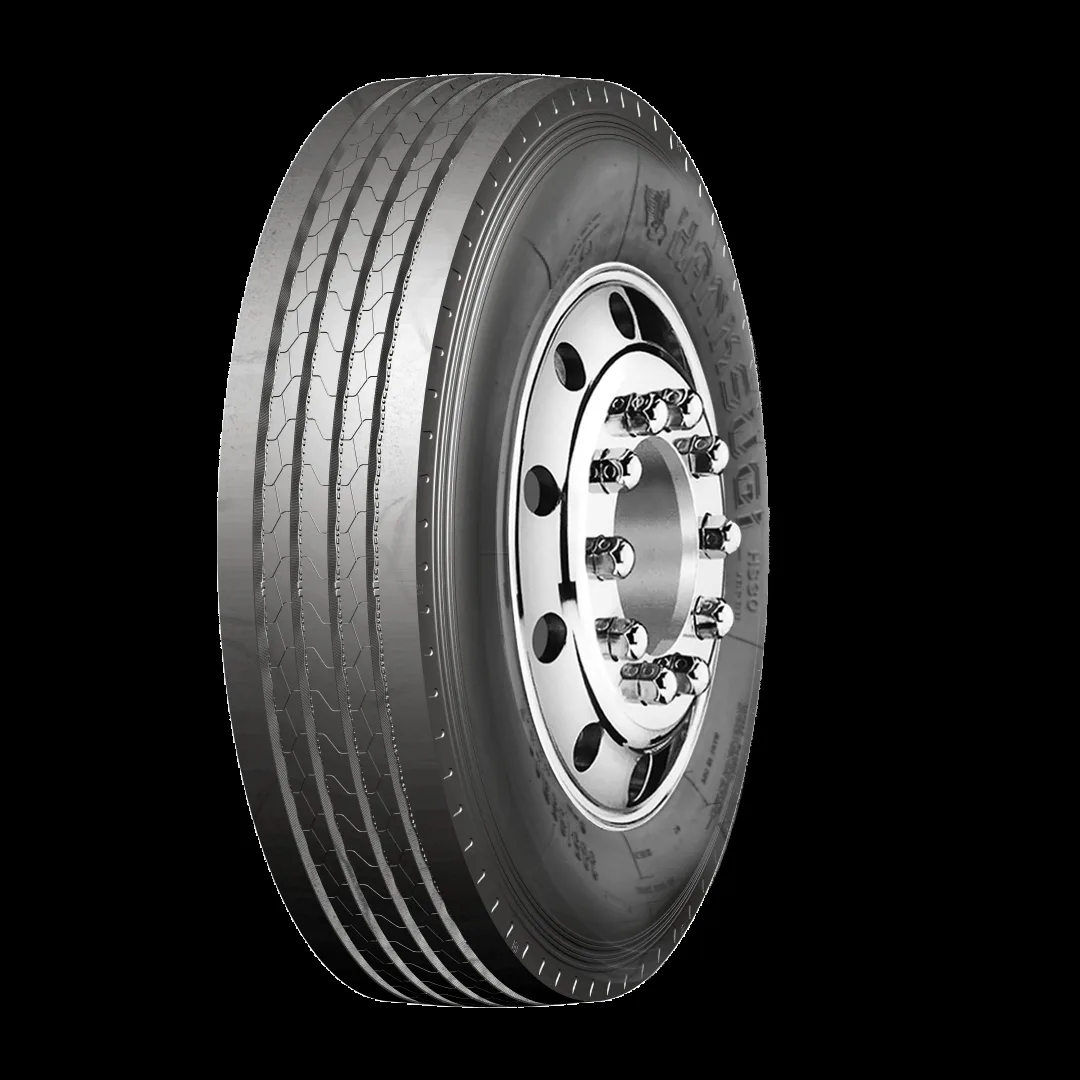
Low rolling resistance free-axle tire with 3D wavy tread grooves, uniform carbon dispersion compound, and optimized footprint for outstanding fuel economy and even wear.
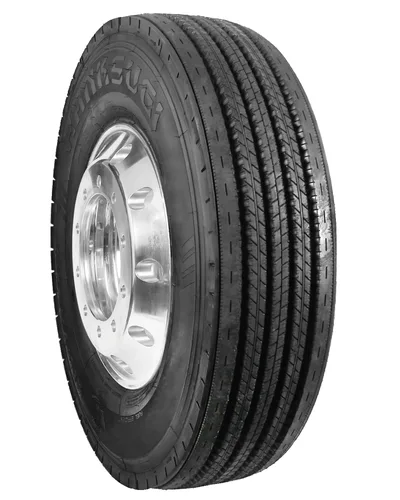
New-generation compound with superior abrasion resistance and low heat buildup. Fuel economy optimized free-axle tire for high-mileage steer-position applications.
Hanksugi LATAM steer tires are engineered for the demanding road conditions across Mexico, Chile, Colombia, Argentina, and Brazil. HATT compound technology and NOM/INMETRO certifications standard across the range. The 295/80R22.5 size is the primary focus for Latin American long-distance operations.
The HS26+ Zeus Grip represents Hanksugi's most advanced free-axle steer technology for the Latin American market. The proprietary Zeus Grip compound uses an optimized silica dispersion process to achieve ultra-low rolling resistance while maintaining superior wet and dry grip performance. At 16.5mm tread depth with 18PR load rating and M speed rating, this tire is purpose-built for the 295/80R22.5 size that dominates LATAM long-haul operations. Fleets running primary corridors in Mexico, Brazil, and the Southern Cone report measurable fuel savings when switching from conventional steer compounds to the Zeus Grip formulation.
View HS26+ Zeus Grip Details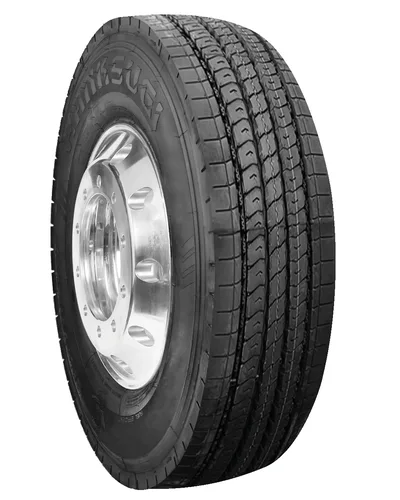
Zeus Grip compound for ultra-low rolling resistance and fuel-saving performance. Purpose-built for 295/80R22.5 free-axle LATAM applications.
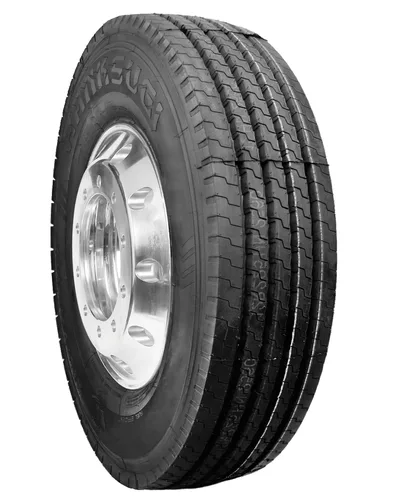
Low rolling resistance steer tire with lateral anti-slip features and low noise emission. Widest size range in the LATAM steer lineup.
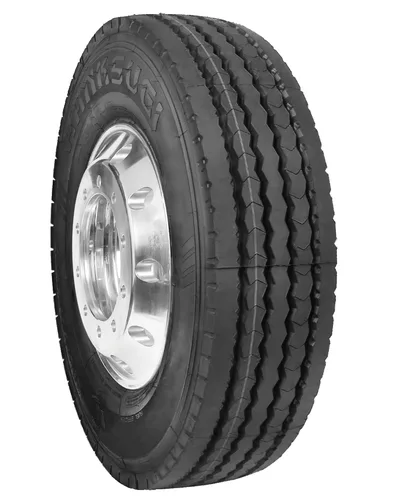
High load capacity steer tire with low rolling resistance and anti-uneven wear technology for medium and regional applications.
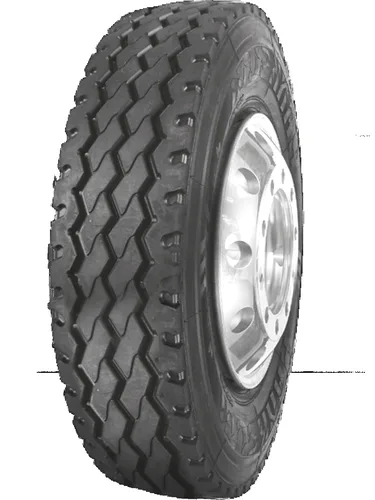
Mixed surface capability with superior grip and traction. Deep 18mm tread for extended life on demanding steer-position applications.
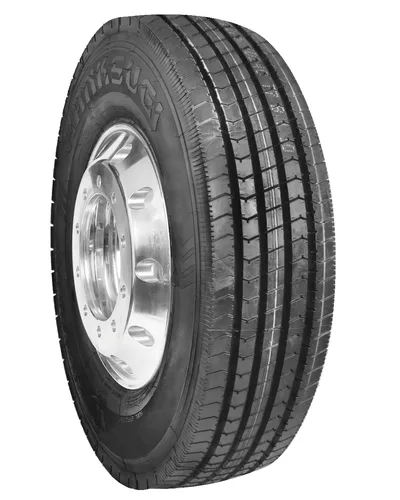
Wet and dry performance with retreadable casing construction. Extra deep 15.5mm tread for extended steer-position mileage on the 295/80R22.5 size.
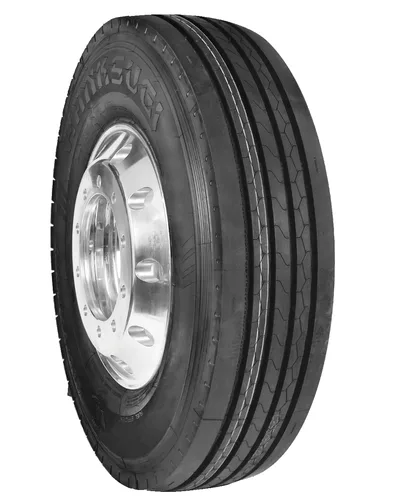
Wide tread contact patch with closed shoulder design and four-rib drainage system. Engineered for all-position versatility on 295/80R22.5.
Hanksugi steer tires cover every major commercial truck size used in North and South American markets. Click any size below for detailed specifications, load ratings, and model availability.
| Tire Size | Market | Available Models | Load Range | Details |
|---|---|---|---|---|
| 295/75R22.5 | USA | HS26+, HS66 | 14-16PR | View Size Guide |
| 11R22.5 | USA / LATAM | HS26+, HS66, HS26+ LATAM | 14-16PR | View Size Guide |
| 11R24.5 | USA | HS26+, HS66 | 14-16PR | View Size Guide |
| 295/80R22.5 | LATAM | HS26+ Zeus Grip, HS26+ LATAM, HS76, Orion Grip | 18PR | View Size Guide |
| 315/80R22.5 | LATAM | HS26+ LATAM | 18-20PR | View Size Guide |
| 315/70R22.5 | LATAM | HS26+ LATAM | 18PR | View Size Guide |
| 285/75R24.5 | USA | HS66 | 14PR | View Size Guide |
| 255/70R22.5 | USA / LATAM | HS26+, HS26+ LATAM | 16PR | View Size Guide |
| 215/75R17.5 | LATAM | HS36 | 18PR | View Size Guide |
| 235/75R17.5 | LATAM | HS36 | 18PR | View Size Guide |
| 385/55R22.5 | LATAM | HS36 | 20PR | View Size Guide |
| 13R22.5 | LATAM | HS56 | 18PR | View Size Guide |
| 12R22.5 | LATAM | HS26+ LATAM | 18PR | View Size Guide |
| 225/70R19.5 | LATAM | HS26+ LATAM | 16PR | View Size Guide |
| 245/70R19.5 | LATAM | HS26+ LATAM | 16PR | View Size Guide |
One of the most common questions fleet managers face is whether to run a dedicated steer tire or an all-position tire on the front axle. Both approaches have merit, and the right choice depends on your fleet's operating profile.
For most long-haul Class 8 operations, a dedicated steer tire delivers the best return on investment through lower fuel consumption, longer even wear, and precise handling. The Hanksugi HS26+ and HS66 are purpose-built for this role in the US market. For LATAM fleets that need all-position flexibility, the HS26+ Orion Grip and HS76 provide steer-optimized performance with the versatility to run on other axle positions when needed.
Proper maintenance is the single most important factor in maximizing steer tire life and performance. A premium steer tire on a misaligned front end will wear out faster than an economy tire on a properly set-up truck. Follow these maintenance practices to protect your investment:
Schedule a comprehensive front-end alignment check at every 50,000-mile interval and after any suspension component replacement. Total toe should be set to the tire manufacturer's specification, typically 1/16 to 1/8 inch toe-in for commercial trucks. Excessive toe-in causes rapid center wear, while toe-out produces feathered edges on the rib shoulders. Camber and caster should be checked simultaneously, as even small deviations create diagonal wear patterns that shorten tire life by 30% or more.
Check steer tire pressure weekly with a calibrated gauge when the tires are cold. Under-inflation causes accelerated shoulder wear and increases rolling resistance, directly hurting fuel economy. Over-inflation concentrates wear in the center of the tread and reduces the contact patch available for braking and cornering. Most commercial steer tires run between 100-120 PSI depending on load; follow the load/inflation tables in the tire's technical data sheet. Tire pressure monitoring systems (TPMS) are a cost-effective way to catch slow leaks before they cause damage.
Inspect steer tires during every pre-trip and post-trip check. Look for irregular wear patterns developing on the rib edges, embedded objects in the tread grooves, sidewall damage from curb contact, and any signs of belt separation visible as bulges or distortion. Measure tread depth at three points across the face of each steer tire every 25,000 miles to track wear rate and identify alignment issues early. Remove the tire when tread reaches 4/32 of an inch, the DOT minimum for steer-position tires.
Steer tires should be matched as a pair with equal tread depth on both sides to maintain predictable handling. When one steer tire wears faster than the other, investigate alignment before simply swapping sides. Many Hanksugi steer tires feature retreadable casings that can be given a second or third life through quality retreading programs, reducing your overall cost per mile. Inspect casings for nail holes, sidewall damage, and belt integrity before submitting for retreading. A sound casing from a premium steer tire can support two retreads over its lifetime.
Common questions about commercial truck steer tires, sizing, and maintenance.
A commercial truck steer tire is specifically engineered for the front axle of Class 6, 7, and 8 commercial trucks. These tires feature rib-pattern tread designs optimized for directional stability, precise steering response, and even wear across the tread face. They handle the lateral forces encountered during cornering and lane changes while maintaining low rolling resistance for fuel efficiency. The steer position is the most safety-critical tire position on any commercial vehicle because it directly controls the truck's directional behavior.
Hanksugi steer tires are available in all major commercial truck sizes. For the USA market: 295/75R22.5, 11R22.5, 11R24.5, 255/70R22.5, and 285/75R24.5. For the LATAM market: 295/80R22.5, 315/80R22.5, 315/70R22.5, 12R22.5, 255/70R22.5, 225/70R19.5, 245/70R19.5, 215/75R17.5, 235/75R17.5, 385/55R22.5, and 13R22.5. The 295/75R22.5 is the most popular size for US long-haul applications, while 295/80R22.5 dominates the LATAM market.
Commercial truck steer tires typically last between 100,000 and 200,000 miles depending on the application, alignment maintenance, and driving conditions. Hanksugi steer tires with uniform carbon dispersion compound and optimized tread design consistently deliver mileage at the upper end of this range. Proper wheel alignment, inflation pressure monitoring, and regular inspection can extend steer tire life significantly. Tires should be removed when tread depth reaches 4/32 of an inch, the DOT minimum for steer-position use.
A dedicated steer tire is purpose-built for the front axle with rib patterns optimized for directional stability, precise handling, and low rolling resistance. An all-position tire is designed to perform adequately in steer, drive, and trailer positions but may not match the specialized performance of a dedicated steer tire on the front axle. For Class 8 over-the-road trucks, a dedicated steer tire typically offers better fuel economy and longer even wear. For regional and medium-duty operations, an all-position tire can simplify inventory management while providing acceptable steer-position performance.
Yes, Hanksugi USA steer tires carry SmartWay verification from the EPA, confirming they meet strict low rolling resistance standards that reduce fuel consumption and lower emissions. SmartWay-verified tires can save fleets up to 3% on fuel costs compared to non-verified alternatives. This verification program is managed by the U.S. Environmental Protection Agency and is the recognized standard for fuel-efficient commercial tires in North America.
Zeus Grip is Hanksugi's advanced steer tire compound technology featured on the HS26+ Zeus Grip model for the LATAM market. This compound is specifically formulated for free-axle applications on the 295/80R22.5 size, delivering ultra-low rolling resistance for maximum fuel savings while maintaining grip in wet and dry conditions. The Zeus Grip compound uses an optimized silica distribution process that reduces the hysteresis energy loss that occurs during rolling, translating directly into measurable fuel economy improvements for long-haul fleets.